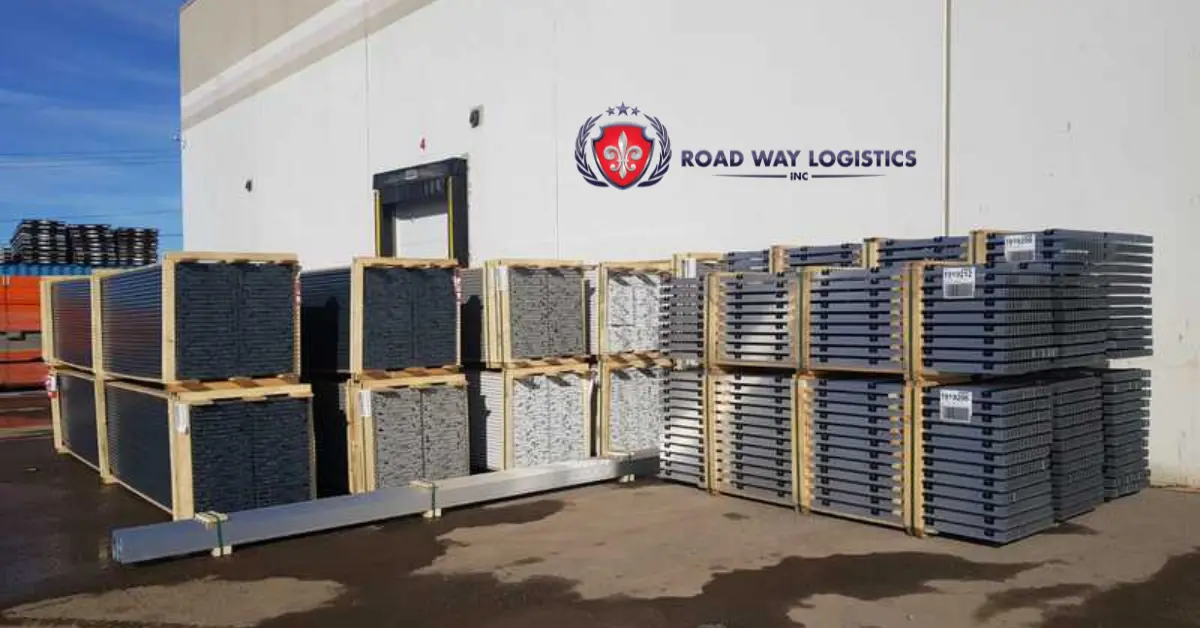
A distribution center, is a logistics facility designed to receive, process, store temporarily, pick, pack, and move goods to customers, retail locations, job sites, warehouses, or other business destinations. While a traditional warehouse is mainly focused on storage, a distribution center is focused on movement, speed, order processing, and delivery flow.
For businesses in Calgary and across Alberta, understanding the difference between a warehouse and a distribution center is important. The right facility can improve delivery times, reduce freight delays, support inventory control, and make local or regional distribution easier.
Roadway Logistics provides warehouse Calgary solutions for businesses across Calgary, Alberta, and surrounding regions, including secure storage, distribution support, and specialized logistics services. Roadway Logistics also offers connected services such as cross-docking, transloading, pick and pack, bonded warehouse, container stuffing and destuffing, LTL, FTL, cartage, drayage, and air shipments.
This guide explains what a distribution center is, how it works, how it compares to a warehouse, and when Calgary businesses should choose warehousing, distribution, 3PL logistics, cross-docking, or integrated freight support.
What Is a Distribution Center?
A distribution center is a logistics facility used to move goods through the supply chain efficiently. Products arrive from suppliers, manufacturers, importers, or other warehouses. The distribution center receives the goods, organizes them, prepares orders, and ships them out to customers, stores, job sites, or regional delivery points.
Prologis explains that unlike a basic warehouse, a distribution center is designed for retailers and wholesalers to store, pick, pack, and ship products directly to customers. Smart Warehousing also notes that goods usually stay in a distribution center for a shorter period than in a warehouse, because distribution centers are built for faster product flow.
| Distribution Center Function | What It Means |
| Receiving | Goods arrive from suppliers, manufacturers, carriers, or import shipments |
| Sorting | Products are organized by SKU, order, customer, route, or destination |
| Temporary storage | Inventory may be held for short periods before shipping |
| Pick and pack | Items are selected, packed, labelled, and prepared for delivery |
| Cross-docking | Freight moves quickly from inbound to outbound transport |
| Order fulfillment | Customer, retail, or B2B orders are prepared and shipped |
| Distribution | Goods are shipped to customers, stores, job sites, or other facilities |
In simple terms, a distribution center is built to keep products moving.
What Is a Warehouse?
A warehouse is a facility used mainly for storing goods. Businesses use warehouses to keep inventory safe, organized, and available until it is needed.
A warehouse may store products for days, weeks, months, or even longer depending on business needs. Warehousing is useful for companies that need inventory storage, seasonal stock holding, pallet storage, overflow space, equipment storage, import freight holding, or commercial freight staging.
| Warehouse Function | What It Means |
| Storage | Goods are kept safely for short-term or long-term use |
| Inventory organization | Products are labelled, counted, and stored by location |
| Pallet storage | Commercial goods are stored on pallets or racks |
| Freight staging | Goods are held before pickup, shipping, or delivery |
| Security | Inventory is protected while inside the facility |
| Handling | Goods are loaded, unloaded, and moved within the warehouse |
A warehouse can be part of a distribution process, but its main role is storage and inventory control.
Warehouse vs Distribution Center: Main Difference
The biggest difference is purpose.
A warehouse stores goods. A distribution center moves goods.
Intek Logistics explains that distribution centers focus on preparing and delivering products to customers, while warehouses usually serve as storage points that may feed distribution centers.
| Feature | Warehouse | Distribution Center |
| Main purpose | Storage | Fast movement and order processing |
| Inventory dwell time | Longer | Shorter |
| Order fulfillment | Limited or optional | Core function |
| Pick and pack | Sometimes available | Commonly included |
| Cross-docking | Sometimes available | Often important |
| Customer delivery | May be indirect | Usually connected to outbound delivery |
| Best for | Storage, inventory holding, overflow space | Fulfillment, distribution, fast freight flow |
| Speed focus | Lower | Higher |
| Service model | Store and protect goods | Receive, process, and ship goods |
A business may need a warehouse, a distribution center, or a facility that does both. Roadway Logistics supports Calgary businesses with warehousing, distribution, cross-docking, transloading, and 3PL logistics services, which makes it easier to combine storage and movement under one provider.
Why Distribution Centers Matter
Distribution centers are important because modern customers and businesses expect faster shipping, accurate order handling, and reliable delivery. Whether a company sells to retailers, commercial customers, construction sites, industrial buyers, or ecommerce customers, freight needs to move efficiently.
A distribution center helps improve:
| Business Need | How a Distribution Center Helps |
| Faster delivery | Goods are processed and shipped quickly |
| Better order accuracy | Inventory is picked, packed, and organized |
| Lower delays | Freight is staged and routed properly |
| Regional reach | Goods can move across Calgary and Alberta |
| Inventory flow | Stock moves instead of sitting too long |
| Customer satisfaction | Orders arrive on time and in better condition |
| Freight coordination | Warehousing, trucking, and distribution work together |
For Calgary businesses, this is especially valuable because freight often moves between warehouses, industrial areas, retail locations, job sites, rail networks, airport areas, and regional Alberta markets.
How a Distribution Center Works
A distribution center follows a structured process. The exact workflow depends on the type of freight, the business model, and the delivery requirements.
| Step | What Happens |
| 1. Inbound freight arrives | Goods arrive by truck, container, rail-connected transport, courier, or supplier delivery |
| 2. Receiving team checks goods | Freight is inspected, counted, and recorded |
| 3. Inventory is sorted | Products are organized by SKU, customer, order, route, or storage requirement |
| 4. Goods are stored or staged | Inventory is placed in short-term storage or prepared for fast outbound movement |
| 5. Orders are picked | Staff select the required products |
| 6. Orders are packed | Goods are packed, labelled, wrapped, or prepared for freight movement |
| 7. Freight is loaded | Orders are loaded onto trucks, trailers, or delivery vehicles |
| 8. Shipments are delivered | Goods move to customers, retailers, job sites, or regional destinations |
This process helps businesses avoid bottlenecks and gives them more control over how inventory moves.
Warehouse vs Distribution Center by Business Type
Different businesses need different logistics setups. A construction supplier may need pallet storage and scheduled job-site delivery. An ecommerce brand may need pick and pack fulfillment. A manufacturer may need inbound parts storage and outbound freight distribution.
| Business Type | Better Fit | Why |
| Ecommerce brand | Distribution center | Needs order fulfillment and fast shipping |
| Manufacturer | Warehouse + distribution center | Needs parts storage and outbound movement |
| Retailer | Distribution center | Needs replenishment and store delivery |
| Importer | Warehouse + transloading | Needs unloading, storage, and distribution |
| Construction supplier | Warehouse + local distribution | Needs storage and scheduled site delivery |
| Industrial company | Warehouse | May need secure storage for heavy goods |
| Wholesale distributor | Distribution center | Needs B2B order processing and delivery |
| Seasonal business | Warehouse + 3PL | Needs flexible space and scalable handling |
The best option depends on how long goods need to stay in storage and how quickly they need to move out.
Warehouse, Distribution Center, Fulfillment Center, and 3PL: What Is the Difference?
These terms are often used together, but they are not exactly the same.
| Facility or Service | Main Purpose |
| Warehouse | Stores inventory safely |
| Distribution center | Receives, processes, and ships goods quickly |
| Fulfillment center | Picks, packs, and ships orders, often for ecommerce |
| 3PL warehouse | Outsourced logistics provider that may handle storage, fulfillment, freight, and distribution |
| Cross-dock facility | Transfers freight quickly from inbound to outbound transport |
| Transload facility | Moves freight between transportation modes, such as container to truck |
Roadway Logistics offers 3PL logistics in Calgary and highlights local expertise, advanced infrastructure, customizable solutions, and integrated warehousing, fulfillment, and transportation services.
Why Calgary Businesses Need Warehousing and Distribution Support
Calgary is a major logistics location for Alberta because it connects businesses to industrial areas, highways, rail networks, airport cargo movement, and regional markets. Companies in Calgary often need warehousing and distribution for local freight, Alberta-wide delivery, import/export support, construction logistics, retail distribution, and industrial supply chains.
Roadway Logistics describes Calgary as a vital logistics hub that connects Western Canada’s road, rail, and intermodal networks.
| Calgary Logistics Need | Best Service |
| Store inventory | Warehousing |
| Move goods quickly | Distribution center support |
| Transfer freight between trucks | Cross-docking |
| Move freight from container to truck | Transloading |
| Pick and pack orders | Fulfillment support |
| Deliver pallets locally | Cartage or local trucking |
| Ship smaller loads | LTL transportation |
| Ship full loads | FTL transportation |
| Handle imported goods | Bonded warehouse or transloading support |
A Calgary business may not need only one service. Many businesses need a connected logistics solution that includes storage, handling, distribution, and transportation.
Distribution Center Services Roadway Logistics Can Support
Roadway Logistics provides several services that support warehouse and distribution operations in Calgary and Alberta.
| Service | How It Supports Distribution |
| Warehousing | Stores goods before distribution |
| 3PL logistics | Outsources storage, fulfillment, and freight support |
| Pick and pack | Prepares individual or B2B orders |
| Cross-docking | Speeds up movement from inbound to outbound freight |
| Transloading | Transfers goods between containers, trucks, or rail-connected transport |
| Bonded warehouse support | Helps with certain import-related storage requirements |
| Container stuffing and destuffing | Loads and unloads container freight |
| LTL freight | Moves smaller shipments efficiently |
| FTL freight | Moves full truckload shipments |
| Cartage | Handles local Calgary freight movement |
| Drayage | Supports container movement |
| White glove | Provides specialized handling and delivery support |
Roadway Logistics lists these warehousing and trucking services across its service menu, including cross-docking, transloading, pick and pack, bonded warehouse, container stuffing and destuffing, drayage, FTL, LTL, flatdeck, white glove, cartage, and air shipments.
Warehouse vs Distribution Center: Cost Considerations
The cost of warehousing or distribution depends on storage time, handling needs, space requirements, labour, order volume, equipment, transportation, and value-added services.
| Cost Factor | Warehouse Impact | Distribution Center Impact |
| Storage time | Higher if goods stay long-term | Lower if goods move quickly |
| Labour | Receiving and storage labour | Picking, packing, sorting, and shipping labour |
| Technology | Inventory tracking | Inventory, order, and transportation coordination |
| Equipment | Forklifts, racking, pallet handling | Dock equipment, conveyors, scanning, route staging |
| Transportation | May be separate | Usually connected to outbound shipping |
| Order volume | Less important if goods are stored | Very important for fulfillment and distribution |
A warehouse may be more cost-effective when goods need to be stored for a longer time. A distribution center may be better when goods need to move quickly and frequently.
Cross-Docking: When Storage Is Not the Goal
Cross-docking is a distribution strategy where goods are received and quickly transferred to outbound transportation, often with little or no long-term storage.
Roadway Logistics explains that cross-docking can reduce warehousing costs and speed up delivery by transferring goods directly from inbound to outbound vehicles without long-term storage.
| Cross-Docking Use Case | Benefit |
| Retail replenishment | Faster store delivery |
| Time-sensitive freight | Less waiting time |
| Seasonal spikes | Moves volume quickly |
| LTL consolidation | Combines freight for efficient delivery |
| Calgary inbound freight | Transfers to local or regional trucks |
| Distribution center overflow | Reduces storage pressure |
Cross-docking is useful when a business does not want inventory sitting in storage. It is especially helpful for fast-moving freight, retail goods, scheduled deliveries, and supply chains that prioritize speed.
Transloading: When Freight Needs to Change Modes
Transloading is different from cross-docking. It involves transferring goods from one mode of transportation to another, such as from rail to truck, container to trailer, or truck to rail-connected movement.
Roadway Logistics explains that transloading is commonly used to transfer goods between transportation modes and can support importers, exporters, manufacturers, retailers, ecommerce businesses, oil and gas companies, and agriculture businesses.
| Transloading Scenario | Example |
| Container to truck | Imported goods are unloaded and moved for local delivery |
| Rail to truck | Bulk or palletized freight moves to local destinations |
| Truck to warehouse | Goods are staged before distribution |
| Warehouse to outbound trailer | Freight is prepared for final delivery |
| Mixed freight sorting | Goods are separated by customer or route |
A distribution center may use transloading when goods arrive in one format and need to leave in another.
Distribution Center and 3PL Logistics
A 3PL provider can operate warehousing, distribution, fulfillment, and transportation on behalf of another business. Instead of hiring warehouse staff, managing dock schedules, buying equipment, and coordinating carriers internally, a business can outsource these tasks.
Roadway Logistics states that its 3PL warehouse services provide local expertise in Calgary, advanced warehouse management and order fulfillment systems, flexible solutions, and customer-focused support.
| 3PL Distribution Service | Business Benefit |
| Inventory storage | Avoids needing your own warehouse |
| Pick and pack | Helps fulfill customer orders |
| Freight staging | Prepares shipments for pickup or delivery |
| Cross-docking | Reduces storage time |
| Transloading | Supports import/export freight movement |
| Local trucking | Connects warehouse to customer |
| LTL/FTL shipping | Supports different shipment sizes |
| Reporting and coordination | Improves supply chain visibility |
For Calgary businesses, 3PL logistics can be especially useful when order volume is growing, warehouse space is limited, or freight movement is becoming too complex to manage internally.
Industries That Use Distribution Centers
Distribution centers support many industries. Any business that moves products regularly can benefit from a facility designed for speed, accuracy, and transportation coordination.
| Industry | Distribution Center Use |
| Retail | Store replenishment and inventory movement |
| Ecommerce | Pick, pack, and customer shipping |
| Manufacturing | Parts storage and finished goods distribution |
| Construction | Material staging and job-site delivery |
| Oil and gas | Industrial equipment and parts distribution |
| Agriculture | Supplies, packaged goods, and equipment movement |
| Wholesale | B2B order processing and pallet distribution |
| Healthcare suppliers | Time-sensitive inventory movement |
| Food and beverage | Fast product flow and scheduled distribution |
| Import/export | Container unloading, storage, and regional delivery |
For Alberta businesses, distribution support can help connect Calgary, Edmonton, Red Deer, Lethbridge, Fort McMurray, Airdrie, Balzac, Rocky View County, Okotoks, Cochrane, and surrounding areas.
Distribution Center Services in Calgary and Alberta
| Area | Distribution Opportunity |
| Calgary | Warehousing, 3PL, cross-docking, distribution |
| Northeast Calgary | Airport-area freight and industrial logistics |
| Southeast Calgary | Manufacturing, warehousing, and commercial freight |
| Airdrie | Local and regional freight distribution |
| Balzac / Rocky View County | Warehouse overflow and distribution support |
| Chestermere | Local delivery and freight movement |
| Okotoks | Regional distribution and storage |
| Cochrane | Business freight support |
| Red Deer | Central Alberta distribution |
| Edmonton | Alberta-wide logistics connections |
| Lethbridge | Southern Alberta freight support |
| Fort McMurray | Industrial and energy-sector distribution |
Signs Your Business Needs a Distribution Center
A business may need distribution center support when products must move faster, orders are increasing, or internal warehouse operations are becoming difficult to manage.
| Sign | What It Means |
| Orders are delayed | Fulfillment process needs improvement |
| Inventory is hard to track | Warehouse organization may need support |
| Local deliveries are inconsistent | Distribution and trucking need better coordination |
| Freight sits too long | Cross-docking or faster outbound planning may help |
| You are running out of space | 3PL warehousing may be needed |
| You ship to multiple Alberta cities | Regional distribution support can improve flow |
| You receive container freight | Transloading and warehouse support may be required |
| Seasonal spikes cause stress | Flexible warehousing and distribution can help |
| Your team spends too much time on logistics | Outsourcing can free internal resources |
If these issues happen regularly, working with a Calgary logistics provider can help improve the supply chain.
How to Choose Between a Warehouse and Distribution Center
The choice depends on your business goals.
| Choose a Warehouse If You Need | Choose a Distribution Center If You Need |
| Long-term storage | Faster outbound shipping |
| Overflow space | Order fulfillment |
| Pallet storage | Pick and pack |
| Inventory protection | Route-based distribution |
| Seasonal storage | Cross-docking |
| Secure freight holding | Frequent delivery movement |
| Lower storage-focused costs | Customer-focused shipping speed |
Many businesses need both. For example, a retailer may store seasonal inventory in a warehouse but use distribution center services for active products. An importer may use warehouse storage after container destuffing, then distribute goods across Calgary and Alberta when orders are ready.
Why Choose Roadway Logistics?
Roadway Logistics is a strong fit for Calgary businesses because it connects warehousing, distribution, trucking, cross-docking, transloading, and 3PL support under one logistics network.
| Roadway Logistics Service | Business Benefit |
| Warehousing | Secure storage and inventory support |
| Distribution | Helps move goods to customers, sites, or regional destinations |
| 3PL logistics | Outsources warehouse and freight operations |
| Cross-docking | Speeds up freight movement and reduces storage time |
| Transloading | Supports container, rail, truck, and multimodal freight |
| Pick and pack | Supports order preparation and fulfillment |
| LTL transportation | Cost-effective smaller freight shipping |
| FTL transportation | Dedicated truckload movement |
| Cartage | Local Calgary freight delivery |
| Drayage | Container movement support |
| White glove delivery | Specialized handling for sensitive freight |
A Word From Roadway Logistics
A warehouse and a distribution center both play important roles in logistics, but they are not the same. A warehouse is mainly used for storage, inventory protection, and freight holding. A distribution center is designed for faster product movement, order processing, pick and pack, cross-docking, shipping, and delivery coordination.
For businesses in Calgary and across Alberta, choosing the right logistics setup can improve delivery speed, reduce delays, lower operational stress, and support long-term growth. Some companies need storage. Others need fulfillment and distribution. Many need a combination of warehousing, trucking, cross-docking, transloading, and 3PL logistics.
Roadway Logistics provides Calgary businesses with flexible warehouse and distribution support, backed by local expertise, integrated services, and freight solutions designed for Alberta supply chains.
Need warehouse or distribution center support in Calgary? Contact Roadway Logistics today for a customized warehousing, distribution, and freight solution.
FAQ: Warehouse vs Distribution Center
What is a distribution center?
A distribution center is a logistics facility that receives, processes, stores temporarily, picks, packs, and ships goods to customers, stores, job sites, or other business destinations.
What is the difference between a warehouse and a distribution center?
A warehouse mainly stores goods, while a distribution center focuses on moving goods quickly through receiving, sorting, order fulfillment, shipping, and distribution.
Is a distribution center the same as a fulfillment center?
Not exactly. A fulfillment center usually focuses on picking, packing, and shipping customer orders, often for ecommerce. A distribution center may handle larger B2B distribution, retail replenishment, cross-docking, regional freight, and order processing.
Does Roadway Logistics offer warehouse services in Calgary?
Yes. Roadway Logistics provides warehouse Calgary solutions, including secure storage, distribution support, and specialized logistics services for businesses in Calgary, Alberta, and nearby regions.
Does Roadway Logistics provide distribution support?
Yes. Roadway Logistics offers services that support distribution, including warehousing, 3PL logistics, cross-docking, transloading, pick and pack, LTL, FTL, cartage, and other freight solutions.
When should a business use a distribution center?
A business should consider a distribution center when it needs faster order processing, frequent outbound shipping, retail replenishment, ecommerce fulfillment, B2B distribution, cross-docking, or regional delivery support.
What areas does Roadway Logistics serve?
Roadway Logistics supports Calgary and Alberta businesses, with listed locations in Calgary and Edmonton. Its Calgary location is 1000 55 Ave NE, Calgary, AB T2E 6Y4.