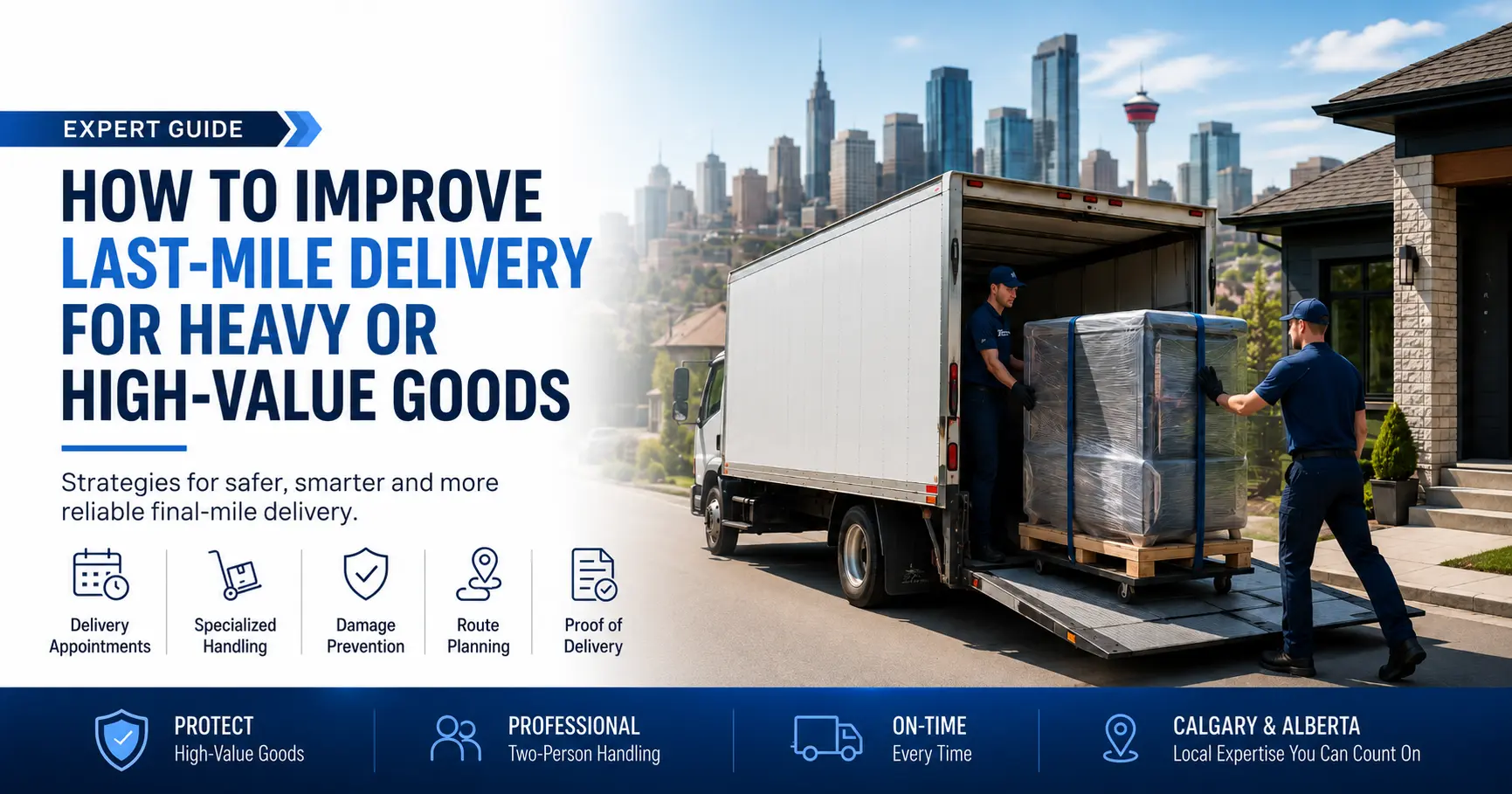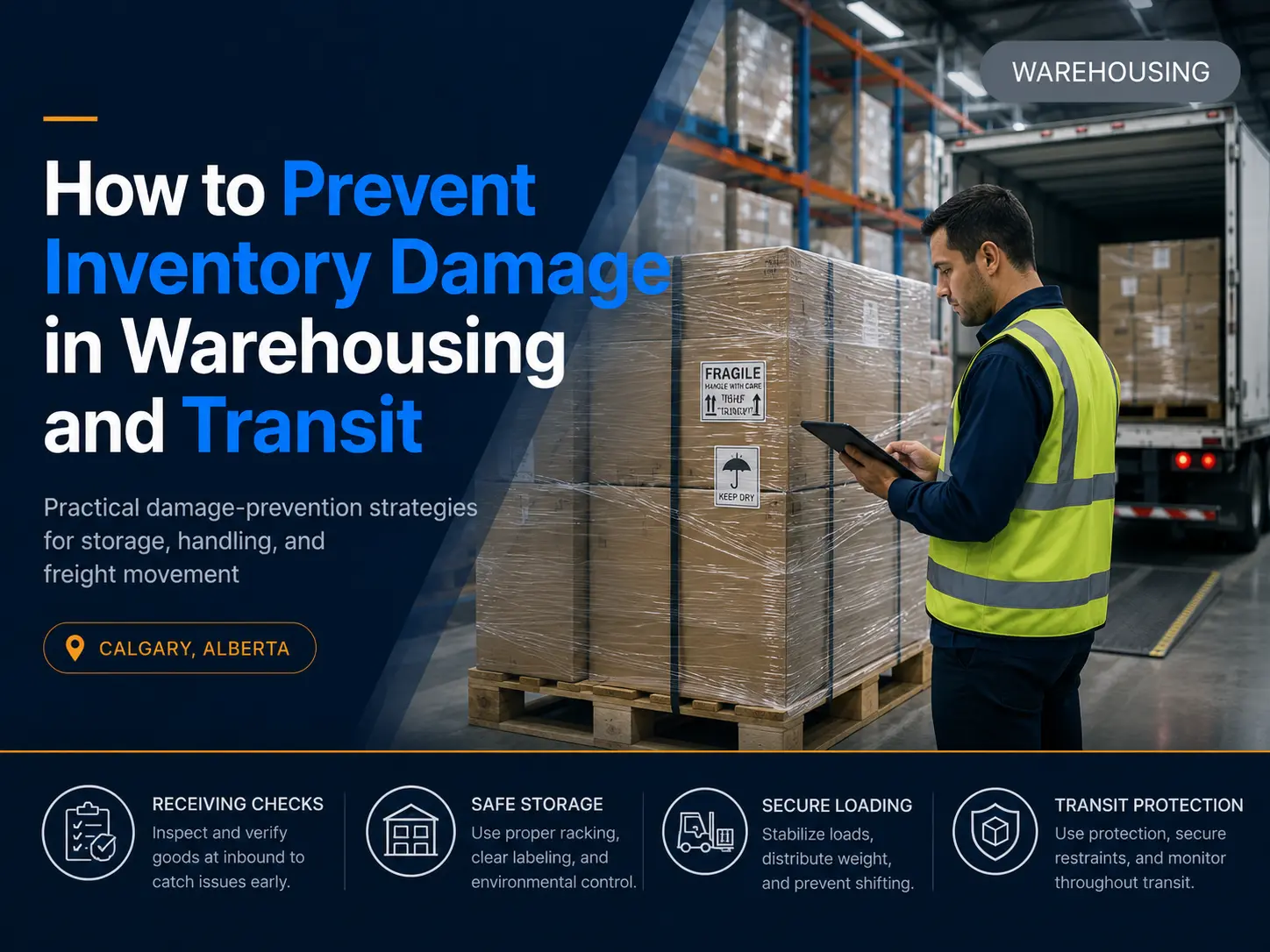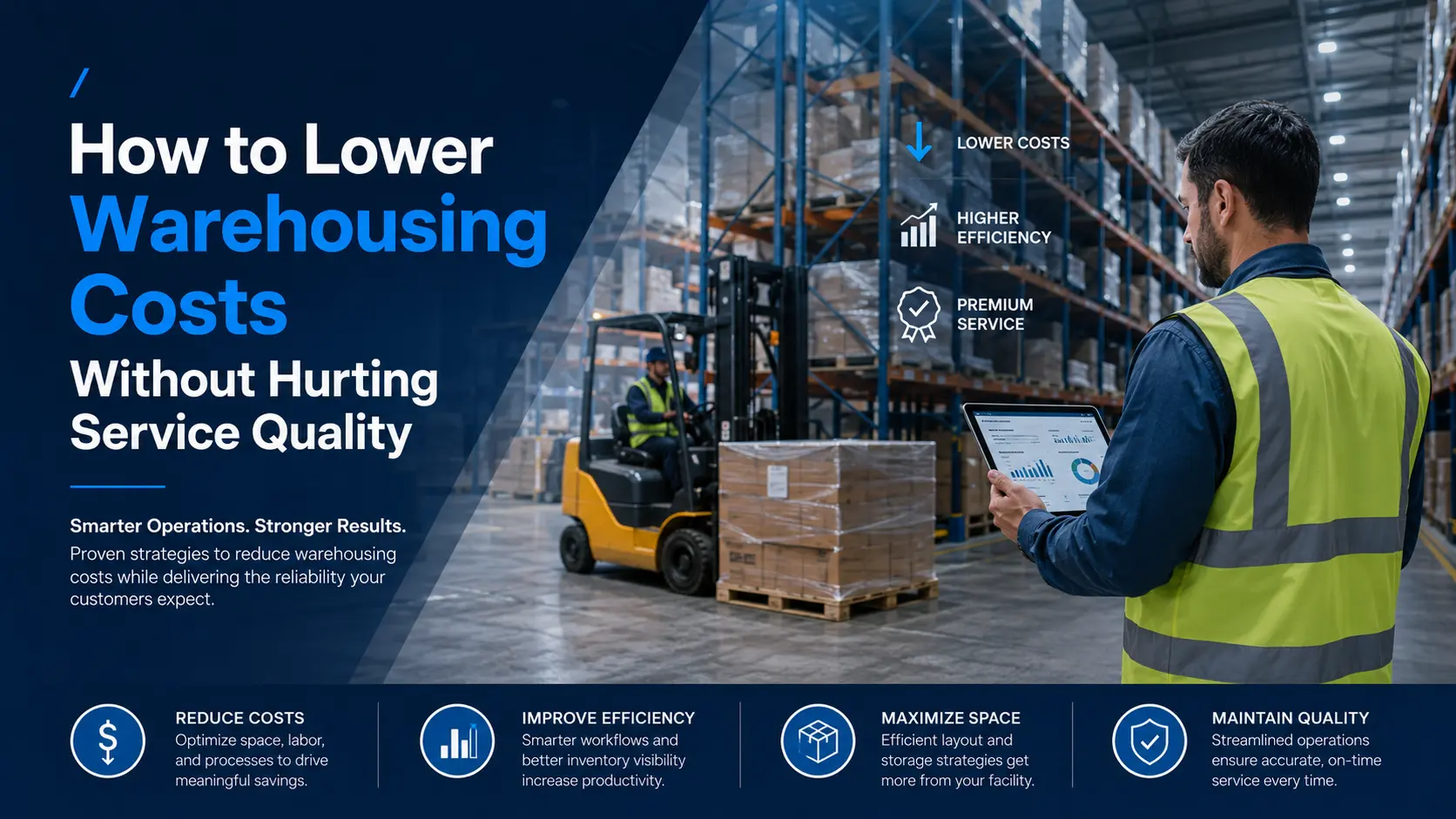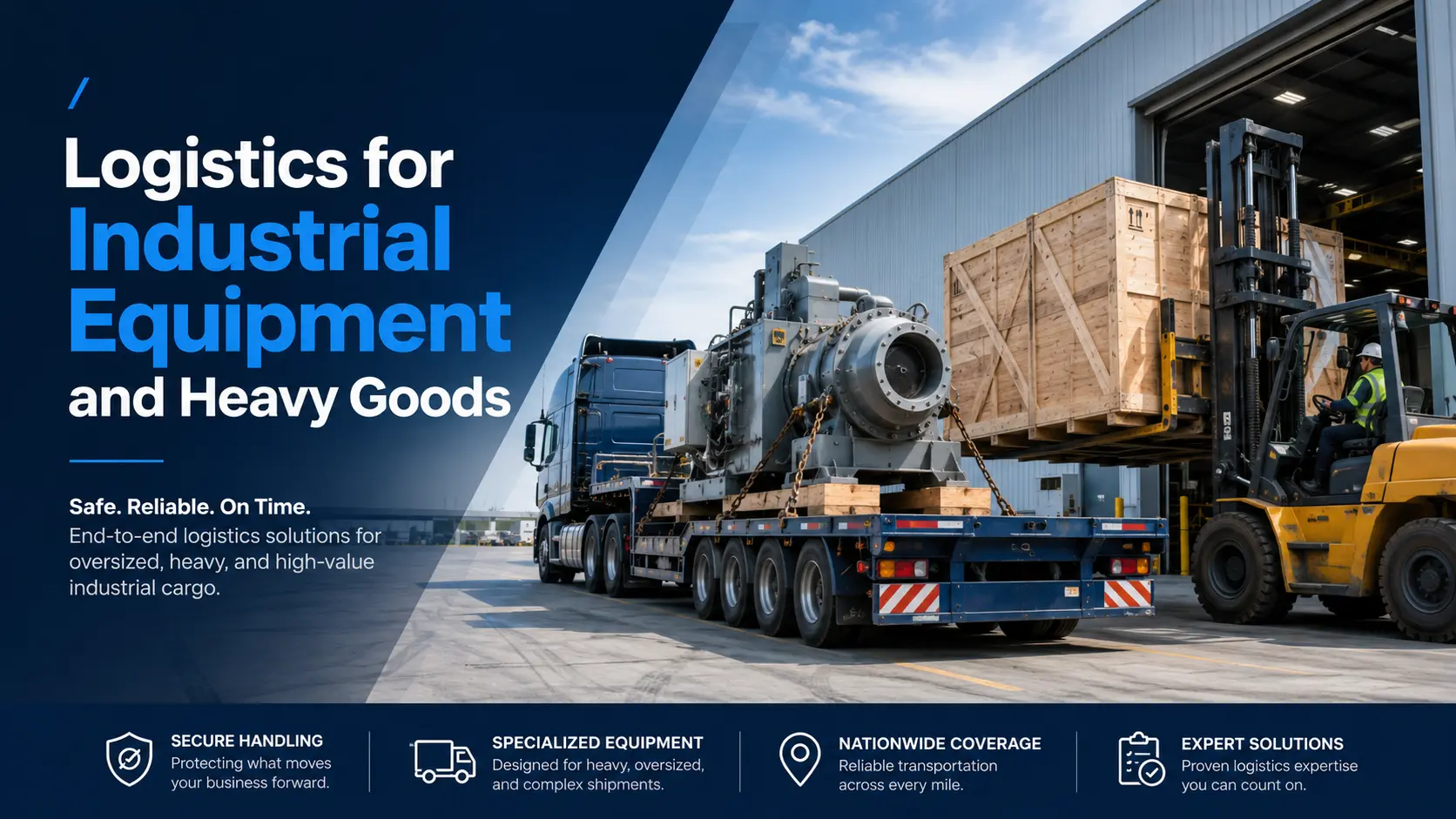
Industrial equipment and heavy goods require a different logistics plan than standard palletized freight. These shipments are often oversized, high-value, awkward to load, difficult to store, and sensitive to delays. A missed delivery can slow a construction project, keep an industrial site waiting, affect a production schedule, or create extra labour costs on both ends of the move.
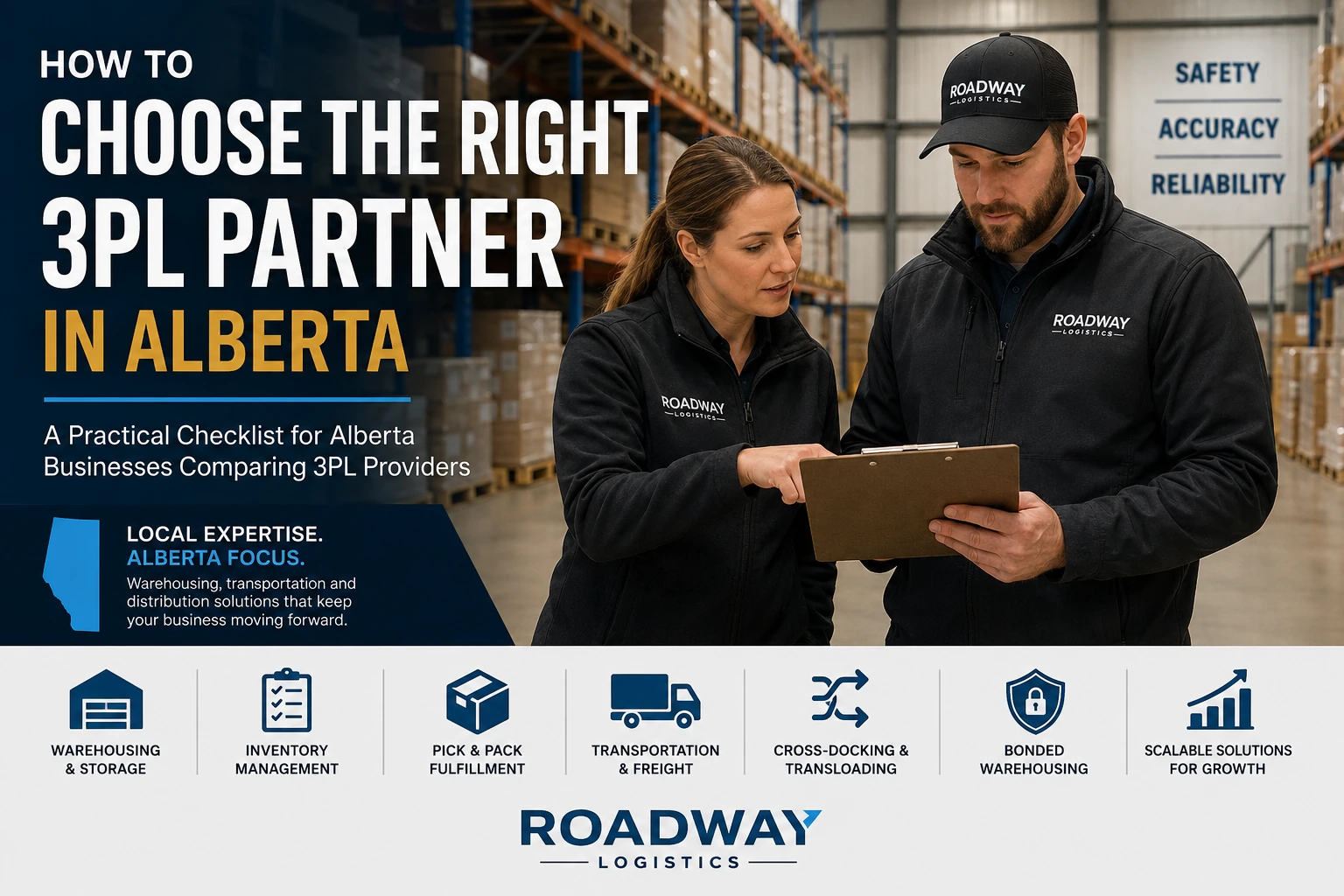
For businesses in Calgary and across Alberta, heavy goods logistics is not only about finding a truck. It is about coordinating the correct equipment, loading method, warehouse staging, route planning, documentation, safety practices, and communication. Roadway Logistics supports businesses with flat deck trucking, warehousing, transloading, cross-docking, specialized handling, LTL, FTL, drayage, and regional distribution support across Alberta.
Service Fit for Roadway Logistics
| Roadway Service | How It Supports This Topic |
| Warehousing | Short-term storage, overflow storage, receiving, staging, and inventory support |
| Cross-docking | Fast transfer from inbound freight to outbound routes |
| Transloading | Transfer between containers, trailers, pallets, and local delivery vehicles |
| Trucking | LTL, FTL, flat deck, cartage, regional distribution, and Alberta freight movement |
| Pick and pack | Order preparation, kit support, bundled items, and fulfillment workflows |
| Specialized handling | Support for high-value, fragile, heavy, awkward, or sensitive freight |
What Counts as Industrial Equipment and Heavy Goods?
Industrial equipment includes machinery, manufacturing components, construction materials, oilfield supplies, agricultural equipment, fabrication parts, HVAC units, electrical gear, structural products, and other freight that may not fit standard enclosed trailer movement. Heavy goods may be palletized, crated, loose, long, tall, wide, fragile, or irregularly shaped.
The logistics plan should be matched to the actual freight profile. A skid of replacement motors may need secure storage and forklift handling. Steel pipe may need flat deck movement. Machinery may need specialized loading support. Sensitive equipment may require careful staging and reduced handling. The right plan reduces damage, delay, and confusion.
| Freight Type | Examples | Logistics Consideration |
| Machinery | Compressors, production equipment, shop machinery | Weight, loading points, securement, route planning |
| Construction materials | Steel, lumber, panels, pipes, concrete accessories | Flat deck access, tarping, job site timing |
| Oilfield and energy supplies | Valves, pumps, fittings, field equipment | Urgency, rugged handling, regional delivery |
| Large components | HVAC units, electrical cabinets, fabricated parts | Protection, staging, dimensional checks |
| Crated industrial goods | Export crates, imported machinery, parts kits | Forklift capacity, inspection, storage |
Why Heavy Goods Logistics Is More Complex Than Standard Freight
Standard freight often follows a predictable pattern: receive, store, pick, pack, and ship. Heavy goods frequently require extra planning before the freight even moves. Dimensions must be checked, loading equipment must be confirmed, space must be reserved, and the receiving site must be ready. The more complex the freight, the more important communication becomes.
A strong heavy goods logistics process considers equipment requirements, dock access, outdoor or indoor staging, shipment consolidation, driver appointment timing, weather exposure, load securement, and delivery restrictions. This level of planning helps prevent avoidable delays.
| Risk | What Can Go Wrong | How a 3PL Helps |
| Wrong equipment | Freight cannot be loaded or unloaded | Confirms trailer, dock, forklift, or handling needs |
| Poor staging | Goods block warehouse space or miss the truck | Creates dedicated staging zones |
| Damage | Scratches, dents, shifted cargo, broken components | Improves packaging checks, securement, and handling |
| Route issues | Delivery delays or failed delivery attempts | Plans pickup and delivery with local route knowledge |
| Miscommunication | Customer, carrier, and warehouse operate from different details | Coordinates dispatch and status updates |
The Role of Flat Deck Trucking
Flat deck trucking is often the right option for heavy, oversized, or awkward industrial freight because the open trailer design allows side, top, or crane loading. This is useful for machinery, steel, lumber, fabricated components, construction materials, and equipment that cannot be loaded through a standard dock door.
For Calgary and Alberta shippers, flat deck movement can connect suppliers, manufacturers, job sites, industrial parks, warehouses, and regional customers. When combined with transloading and warehousing, flat deck service becomes part of a complete heavy goods logistics plan instead of a one-time transportation fix.
Warehousing and Staging for Heavy Goods
Not every heavy shipment moves directly from supplier to final destination. Many industrial businesses need short-term storage, overflow space, inbound receiving, shipment staging, inventory separation, or project-based storage. Warehousing gives the operation control between pickup and final delivery.
Heavy goods warehousing should be practical. The facility must account for floor space, forklift access, dock availability, load sequencing, product protection, and safe movement inside the warehouse. For project cargo, staging can be especially valuable because equipment often needs to arrive in a planned order.
| Warehouse Need | Best Use Case |
| Short-term staging | Project shipments waiting for scheduled delivery |
| Overflow storage | Industrial inventory that no longer fits in the main facility |
| Inbound receiving | Supplier freight arriving before internal staff can process it |
| Cross-docking | Freight that should be transferred quickly to outbound movement |
| Transloading | Goods moving between containers, trailers, rail, or local delivery vehicles |
Transloading for Industrial Equipment
Transloading helps transfer freight from one mode of transportation to another. Industrial goods may arrive in containers, rail-linked moves, dry vans, flat decks, or LTL shipments before being moved into storage or onto a different outbound trailer. For heavy goods, transloading requires careful planning because cargo may be oversized, dense, or difficult to reposition.
A transloading partner can help unload, sort, re-palletize, stage, document, and reload freight so it can continue moving. For imported industrial equipment, transloading can also support container destuffing, warehouse receiving, and regional truck distribution.
Calgary and Alberta Service Area Advantages
Calgary is a practical location for industrial freight because it connects regional industrial activity, construction markets, energy supply chains, manufacturing, warehousing, rail-linked infrastructure, air cargo, and Alberta trucking routes. Businesses expanding across Alberta often need a logistics partner that understands Calgary, Edmonton, Red Deer, Lethbridge, Medicine Hat, Fort McMurray, Grande Prairie, Airdrie, Balzac, and Rocky View County.
For industrial freight, local familiarity matters. Heavy goods deliveries may involve industrial parks, job sites, yard access, appointment windows, gate instructions, and special receiving requirements. A regional logistics partner can help reduce missed details.
How Roadway Logistics Can Help
Roadway Logistics supports businesses that need reliable movement for industrial equipment and heavy goods. The service fit includes flat deck trucking, LTL, FTL, warehousing, cross-docking, transloading, specialized handling, drayage, and freight consolidation. This gives industrial shippers a practical way to combine storage, staging, and transportation under one logistics plan.
Whether your business is moving machinery into Calgary, staging heavy goods for a project site, distributing industrial products across Alberta, or receiving imported equipment, Roadway Logistics can help create a workflow that keeps freight organized and moving.
| Business Need | Roadway Logistics Support |
| Heavy or oversized freight | Flat deck, specialized handling, trucking coordination |
| Project staging | Warehouse space, short-term storage, staged dispatch |
| Imported equipment | Drayage, transloading, container handling, bonded warehouse support when applicable |
| Regional distribution | Calgary, Edmonton, Central Alberta, Southern Alberta, Northern Alberta routes |
| Freight transfer | Cross-docking, transloading, pallet rework, load consolidation |
Local Service Areas
Roadway Logistics can position this topic around Calgary, Edmonton, and Alberta-wide service coverage. The local SEO copy should naturally mention Calgary, Edmonton, Red Deer, Airdrie, Balzac, Rocky View County, Lethbridge, Medicine Hat, Fort McMurray, Grande Prairie, and nearby Alberta markets when relevant to the page.
| Area | Use in Content |
| Calgary | Primary service city and warehouse/trucking hub |
| Edmonton | Secondary Alberta logistics market |
| Red Deer | Central Alberta distribution corridor |
| Airdrie, Balzac, Rocky View County | Nearby industrial and warehouse-focused service areas |
| Lethbridge and Medicine Hat | Southern Alberta delivery and distribution references |
| Fort McMurray and Grande Prairie | Northern Alberta and industrial freight references |
Frequently Asked Questions
What is heavy goods logistics?
Heavy goods logistics is the planning, handling, storage, and transportation of large, heavy, awkward, or high-value freight such as machinery, construction materials, industrial parts, and equipment.
Can industrial equipment be stored before delivery?
Yes. A 3PL warehouse can provide short-term staging, overflow storage, inbound receiving, and project-based storage before final delivery.
Is flat deck trucking useful for industrial equipment?
Yes. Flat deck trailers are often used for heavy, oversized, tall, or irregular freight that cannot be loaded easily into enclosed trailers.
What areas does Roadway Logistics serve?
Roadway Logistics supports Calgary, Edmonton, Red Deer, Airdrie, Balzac, Rocky View County, Lethbridge, Medicine Hat, Fort McMurray, Grande Prairie, and Alberta-wide logistics needs.
Can Roadway Logistics help with transloading heavy goods?
Yes. Roadway Logistics supports transloading, cross-docking, warehousing, and trucking for businesses moving heavy or industrial freight.
A Word From Roadway Logistics
If your business needs logistics for industrial equipment or heavy goods in Calgary or across Alberta, contact Roadway Logistics for warehousing, flat deck, transloading, cross-docking, and trucking support.
Contact Roadway Logistics today. Phone: +1 587-350-7615. Email: dispatch@roadwaylogistics.ca. Calgary: 1000 55 Ave NE, Calgary, AB T2E 6Y4, Canada. Edmonton: 20508 118A Ave Edmonton Alberta T5S 2S7.