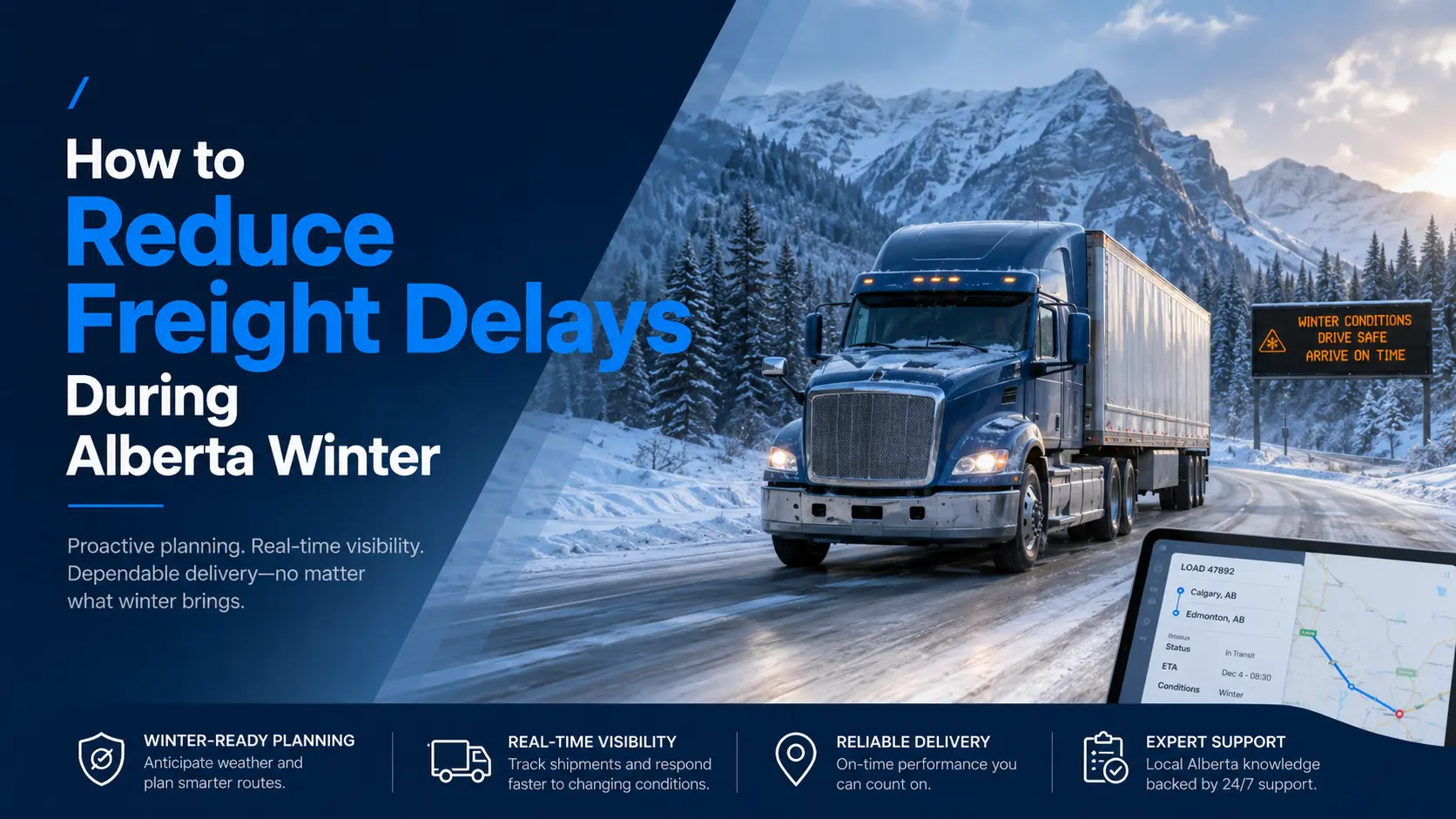
Alberta winter can put real pressure on freight movement. Snow, ice, reduced visibility, highway closures, slower loading, equipment issues, driver availability, and appointment delays can all affect delivery schedules. For businesses that depend on consistent supply, winter logistics should be planned before the first major storm creates problems.
Reducing winter freight delays does not mean controlling the weather. It means building a supply chain that has more flexibility, better visibility, safer staging, and realistic timing. Roadway Logistics supports Calgary and Alberta businesses with warehousing, cross-docking, transloading, trucking, LTL, FTL, freight consolidation, and 3PL support that can help keep freight moving during winter conditions.
Service Fit for Roadway Logistics
| Roadway Service | How It Supports This Topic |
| Warehousing | Short-term storage, overflow storage, receiving, staging, and inventory support |
| Cross-docking | Fast transfer from inbound freight to outbound routes |
| Transloading | Transfer between containers, trailers, pallets, and local delivery vehicles |
| Trucking | LTL, FTL, flat deck, cartage, regional distribution, and Alberta freight movement |
| Pick and pack | Order preparation, kit support, bundled items, and fulfillment workflows |
| Specialized handling | Support for high-value, fragile, heavy, awkward, or sensitive freight |
Why Alberta Winter Creates Freight Delays
Winter delays are usually caused by a combination of conditions. Roads may be covered in snow or ice, visibility may drop, travel may not be recommended, loading yards may slow down, and delivery appointments may need to be adjusted. Even when highways remain open, carriers often need more time to move safely.
The best winter logistics plans assume that some disruption will happen. Businesses that build lead time, use staging, monitor route conditions, and communicate early are usually in a better position than businesses that wait for a delay before reacting.
| Winter Risk | Possible Impact | Planning Response |
| Snow or ice | Slower transit and increased safety risk | Build buffer time and monitor road reports |
| Reduced visibility | Delayed departures or route changes | Use flexible appointment windows |
| Highway closures | Missed delivery windows | Prepare alternate routing or staging |
| Frozen yards or docks | Longer loading and unloading | Confirm site readiness before dispatch |
| Carrier capacity pressure | Higher cost or limited trucks | Book earlier and consolidate freight |
Monitor Road Conditions Before Freight Moves
Alberta shippers should use official road condition tools before scheduling critical loads. Road reports can show conditions such as bare, partly covered, covered, reduced visibility, travel not recommended, and closures. This information helps logistics teams decide whether a shipment should move, wait, stage locally, or use a different route.
For time-sensitive freight, dispatch decisions should consider both the pickup route and the delivery route. A warehouse in Calgary may be clear, but a highway segment toward Edmonton, Red Deer, Lethbridge, Medicine Hat, or Northern Alberta may create delays.
Use Warehousing and Staging to Create Flexibility
Warehousing can reduce winter risk by positioning inventory closer to customers before urgent demand hits. If every order must travel long distance during bad weather, delays are more likely. By staging products in Calgary or Edmonton, businesses can shorten delivery routes and respond faster when road conditions improve.
Short-term staging is also useful for project freight, retail replenishment, industrial goods, and seasonal inventory. Goods can arrive early, be stored safely, and then dispatch when the customer or job site is ready.
| Winter Staging Strategy | How It Helps |
| Pre-position fast movers | Reduces reliance on long-distance winter lanes |
| Store project freight early | Avoids last-minute storm delays |
| Use cross-docking | Keeps freight moving when routes are open |
| Separate urgent inventory | Allows faster picking and dispatch |
| Stage returns locally | Prevents reverse logistics from blocking operations |
Build More Lead Time Into Winter Orders
Winter shipping schedules should not be built the same way as summer schedules. When orders are urgent, lead time is harder to protect. Alberta businesses should review their order cutoff times, appointment windows, supplier dispatch schedules, and promised delivery timelines before winter peak periods.
The simplest improvement is to communicate realistic lead times with customers before delays happen. That does not mean lowering service quality. It means setting promises that account for seasonal conditions and giving the logistics team enough time to execute safely.
| Timing Area | Winter Adjustment |
| Order cutoff | Move cutoff earlier during storm periods |
| Supplier dispatch | Request earlier shipping on critical inventory |
| Customer appointments | Use wider appointment windows |
| Inbound receiving | Plan dock labour around weather delays |
| Regional routes | Group deliveries by realistic corridor timing |
Consolidate Freight Where Possible
Freight consolidation can reduce the number of separate shipments moving during high-risk weather windows. If several small loads are going to similar destinations, consolidating freight may reduce handling, improve routing, and make carrier planning easier.
Consolidation is especially useful for distributors, wholesalers, e-commerce brands, industrial suppliers, and retail replenishment programs. A 3PL can receive inbound freight, group it by destination, and dispatch it through more organized lanes.
Prepare Freight for Cold Weather
Some products can be affected by cold temperatures, condensation, snow exposure, or freezing conditions. Even goods that are not temperature-controlled may require better packaging, shrink wrap, tarping, indoor staging, or faster dock transfer in winter. Protecting freight at the warehouse can reduce damage claims and customer complaints.
Businesses should identify items that require protection from freeze, moisture, impact, or prolonged exposure. This should be documented in the shipping instructions so warehouse teams, dispatchers, and carriers understand the requirements.
| Freight Concern | Protection Method |
| Moisture exposure | Shrink wrap, covered staging, careful dock transfer |
| Freeze risk | Temperature-aware planning and reduced dwell time |
| Fragile packaging | Reinforcement and careful handling |
| Outdoor loading | Tarping and weather-aware scheduling |
| Long dwell time | Better appointment coordination |
Communicate Early With Customers and Carriers
Winter logistics depends on clear communication. Customers should know when freight is staged, when it is dispatched, and when road conditions may affect delivery timing. Carriers should receive accurate shipment details, site instructions, appointment windows, and any special handling notes.
A 3PL partner can help centralize communication between the shipper, warehouse, carrier, and customer. This reduces confusion and gives everyone a more realistic view of the shipment status.
How Roadway Logistics Can Help
Roadway Logistics helps Calgary and Alberta businesses reduce winter freight delays through warehousing, cross-docking, transloading, freight consolidation, LTL, FTL, trucking, staging, and 3PL support. These services give businesses more flexibility when road conditions change or delivery schedules need to be adjusted.
Instead of reacting to winter disruption after it happens, businesses can use Roadway Logistics to pre-position inventory, stage freight, consolidate loads, coordinate regional movement, and communicate more clearly across the supply chain.
Local Service Areas
Roadway Logistics can position this topic around Calgary, Edmonton, and Alberta-wide service coverage. The local SEO copy should naturally mention Calgary, Edmonton, Red Deer, Airdrie, Balzac, Rocky View County, Lethbridge, Medicine Hat, Fort McMurray, Grande Prairie, and nearby Alberta markets when relevant to the page.
| Area | Use in Content |
| Calgary | Primary service city and warehouse/trucking hub |
| Edmonton | Secondary Alberta logistics market |
| Red Deer | Central Alberta distribution corridor |
| Airdrie, Balzac, Rocky View County | Nearby industrial and warehouse-focused service areas |
| Lethbridge and Medicine Hat | Southern Alberta delivery and distribution references |
| Fort McMurray and Grande Prairie | Northern Alberta and industrial freight references |
Frequently Asked Questions
What causes freight delays in Alberta winter?
Common causes include snow, ice, reduced visibility, highway closures, slower loading, appointment changes, equipment issues, and carrier capacity pressure.
How can warehousing reduce winter delays?
Warehousing allows businesses to position inventory closer to customers, stage freight before storms, and dispatch goods when routes are safer or more predictable.
Is cross-docking useful during winter?
Yes. Cross-docking can help move freight quickly through a facility when goods are ready for outbound delivery and routes are open.
Should businesses change delivery promises during winter?
Yes. Winter lead times should be realistic and should account for weather, road conditions, loading delays, and possible route disruptions.
Can Roadway Logistics help with winter freight planning?
Yes. Roadway Logistics supports winter freight planning through warehousing, cross-docking, transloading, trucking, LTL, FTL, and Alberta-wide logistics support.
A Word From Roadway Logistics
If winter freight delays are affecting your Alberta supply chain, contact Roadway Logistics for warehousing, staging, cross-docking, trucking, and distribution support in Calgary and across Alberta.
Contact Roadway Logistics today. Phone: +1 587-350-7615. Email: dispatch@roadwaylogistics.ca. Calgary: 1000 55 Ave NE, Calgary, AB T2E 6Y4, Canada. Edmonton: 20508 118A Ave Edmonton Alberta T5S 2S7.