Choosing a third-party logistics provider is not simply a decision about where to store your inventory.
The 3PL partner you choose may become responsible for receiving your products, organizing inventory, preparing customer orders, handling freight, coordinating transportation, managing returns, supporting seasonal demand, and helping your business expand into new markets.
That makes the decision much more important than comparing warehouse rates.
The right 3PL partner should match your inventory, shipping profile, service requirements, technology needs, geographic reach, growth plans, and operating expectations. The lowest-cost provider may not be the lowest-cost option if poor inventory accuracy, delayed shipments, unsuitable handling, or weak communication creates additional problems elsewhere in your supply chain.
For businesses in Calgary, Edmonton, Red Deer, and across Alberta, local conditions also matter. Long regional shipping distances, winter weather, industrial freight, Western Canada distribution, cross-border movement, and the need to combine warehousing with transportation can all influence which logistics provider is the right fit.
This guide explains how to choose the right 3PL partner in Alberta, what questions to ask before signing an agreement, which warning signs to watch for, and how to compare providers using a practical evaluation framework.
If you are still deciding whether outsourcing logistics is right for your business, start with our guide to what third-party logistics means and how 3PL works.
What Should You Look for in a 3PL Partner?
The best 3PL partner is not necessarily the largest provider or the provider with the lowest storage rate.
It is the provider whose operation fits the way your business actually moves inventory.
A strong evaluation should consider:
- warehouse capabilities
- inventory management
- geographic location
- order fulfillment
- transportation support
- handling requirements
- technology and reporting
- scalability
- pricing structure
- communication
- service standards
- onboarding
- seasonal capacity
- specialized logistics capabilities
- long-term fit
Before comparing providers, you first need a clear picture of your own requirements.
Step 1: Define Your Logistics Requirements Before Requesting Quotes
One of the biggest mistakes businesses make when selecting a 3PL is contacting providers before clearly defining what they need.
If you simply ask:
“How much does warehousing cost?”
you may receive quotes that look comparable but are based on completely different assumptions.
A better starting point is to create a logistics profile for your business.
Inventory Profile
Document:
- number of SKUs
- pallet quantities
- carton quantities
- average inventory levels
- peak inventory levels
- product dimensions
- product weights
- fragile products
- oversized goods
- high-value inventory
- temperature-sensitive products
- lot or expiry tracking requirements
- hazardous or regulated products where applicable
The more complex your inventory, the more important it becomes to choose a provider with processes designed around your product type.
Order Profile
Your 3PL should understand how inventory leaves the warehouse.
Consider:
- B2B pallet orders
- retail replenishment
- individual e-commerce orders
- case picking
- wholesale orders
- subscription boxes
- kits and bundles
- scheduled deliveries
- customer pickups
- project-based shipments
A warehouse optimized for full-pallet distribution may not be the best operation for thousands of small e-commerce orders, and the reverse is also true.
Shipping Profile
Identify how freight typically moves.
For example:
- local Calgary delivery
- Alberta-wide trucking
- LTL freight
- FTL freight
- courier or parcel
- flat-deck transportation
- cross-border freight
- containerized imports
- drayage
- regional distribution
A provider that can connect warehousing with the transportation modes you regularly use may simplify your supply chain.
Value-Added Requirements
You may also need:
- pick and pack
- labeling
- repacking
- pallet rework
- kitting
- assembly
- cross-docking
- transloading
- container stuffing or destuffing
- blocking and bracing
- specialized handling
- bonded warehousing
Create this requirement list before comparing proposals.
Otherwise, important services may appear later as unexpected costs or operational limitations.
Step 2: Evaluate the 3PL’s Alberta Location and Distribution Reach
Warehouse location affects much more than convenience.
It can influence:
- transportation costs
- delivery speed
- regional coverage
- inbound freight planning
- customer service
- carrier access
- emergency delivery options
For businesses serving Alberta and Western Canada, Calgary can function as both a local warehouse market and a regional distribution point.
A Calgary 3PL may support inventory moving to:
- Calgary
- Airdrie
- Cochrane
- Okotoks
- Rocky View County
- Red Deer
- Edmonton
- Lethbridge
- British Columbia
- Saskatchewan
- broader Western Canada markets
Businesses considering a Calgary operation can review Roadway Logistics’ 3PL logistics services in Calgary.
Ask Where Your Customers Actually Are
Do not select a warehouse simply because it is close to your office.
Map your customers and shipping destinations.
If the majority of your inventory ultimately moves north toward Red Deer and Edmonton, west toward British Columbia, east toward Saskatchewan, or south toward the United States, the warehouse should support those movements efficiently.
Your distribution network should be designed around freight flow, not management convenience.
Consider Future Expansion
A growing business should also ask:
Will this 3PL still make sense when our distribution network is twice as large?
If you are entering Alberta from another province or building a Western Canada distribution operation, our guide to logistics for regional distributors expanding into Alberta explains some of the additional considerations.
Step 3: Evaluate the Warehouse — Not Just the Price per Pallet
Storage rates are easy to compare.
Warehouse operations are harder to compare, but often much more important.
When touring or evaluating a facility, look beyond available square footage.
Consider:
- receiving areas
- loading docks
- pallet racking
- shelving
- staging space
- warehouse organization
- traffic flow
- equipment
- cleanliness
- security
- inventory processes
- product segregation
- handling procedures
A well-organized warehouse reduces unnecessary movement and makes receiving, picking, staging, and shipping easier to control.
Businesses evaluating storage options can review Roadway Logistics’ warehousing services in Calgary.
Ask How Your Products Will Be Stored
Different freight requires different storage strategies.
Ask:
- Will inventory be palletized or stored in pick locations?
- Can oversized products be accommodated?
- How are fragile goods separated?
- How are high-volume SKUs positioned?
- How are damaged goods isolated?
- How is short-term staging handled?
- How is overflow inventory managed?
- Can the warehouse adjust as inventory volume changes?
Do not assume that every warehouse handles every product equally well.
Step 4: Examine the Receiving Process
Inventory accuracy begins when goods enter the facility.
If receiving is inaccurate, everything downstream can become inaccurate too.
Ask prospective 3PL providers how they handle:
- purchase orders
- pallet counts
- carton counts
- SKU verification
- visible damage
- lot numbers
- serial numbers
- expiry dates
- discrepancies
- receiving documentation
- put-away
A structured receiving process should establish what arrived, what condition it was in, and where it was placed.
You can learn more about this process in our guide to warehouse receiving in a professional 3PL facility.
Step 5: Evaluate Inventory Visibility and Control
Once inventory enters a third-party warehouse, you need confidence that the warehouse knows:
what you have, where it is, what is available, what is allocated, and what has shipped.
This makes inventory management one of the most important parts of a 3PL relationship.
Ask how the provider handles:
- SKU tracking
- inventory locations
- stock adjustments
- receiving updates
- allocated inventory
- cycle counts
- damaged stock
- low-stock information
- order status
- inventory reports
- customer access to information
Roadway’s guide to 3PL inventory management explains the basic inventory processes businesses should understand before outsourcing warehousing.
Ask to See the Workflow
Do not rely entirely on statements such as:
“Yes, we have inventory software.”
Ask what the workflow actually looks like.
Useful questions include:
- When does received stock become visible?
- How are inventory adjustments approved?
- How are damaged products recorded?
- Can reports be exported?
- How often are cycle counts performed?
- How are stock discrepancies investigated?
- How are multiple SKUs separated?
- Who can access inventory information?
Technology only helps when the underlying warehouse processes are disciplined.
Step 6: Determine Whether the 3PL Can Handle Your Fulfillment Model
Warehousing and fulfillment are related, but they are not identical.
A business storing full pallets for B2B distribution has different requirements from a company shipping individual consumer orders every day.
If your business requires order fulfillment, evaluate:
- order intake
- picking methods
- packing
- packaging materials
- labeling
- multi-SKU orders
- order cutoffs
- shipping preparation
- carrier handoff
- error handling
- returns
For businesses requiring unit-level fulfillment, review Roadway Logistics’ pick and pack services in Calgary.
Match the Fulfillment Model to Your Customers
B2B customers
You may need pallet picking, case picking, retailer labeling, scheduled freight, and delivery appointments.
E-commerce customers
You may need individual-unit picking, packaging, shipping labels, returns, and frequent parcel dispatch.
Wholesale customers
You may require mixed case quantities, retail compliance, palletization, or regional distribution.
Project customers
You may require products staged together and released according to installation or construction schedules.
The 3PL should fit your business model rather than forcing your orders into a process designed for another industry.
Step 7: Look at Transportation Integration
A warehouse does not operate in isolation.
Inventory has to arrive and leave.
When a business uses one provider for storage, another for local delivery, another for LTL, another for drayage, and another for specialized freight, coordination can become difficult.
Ask whether your prospective 3PL can help support the transportation methods you use regularly.
These may include:
- local cartage
- LTL
- FTL
- drayage
- flat deck
- last-mile delivery
- regional distribution
- air freight support
- cross-border transportation
The goal is not necessarily to use one provider for everything.
The goal is to understand how smoothly warehousing and transportation can work together.
Step 8: Check Whether You Need Cross-Docking
Not every shipment needs long-term storage.
Some products move through the warehouse quickly and are better transferred from inbound freight to outbound distribution.
This is where cross-docking may be useful.
Cross-docking can support situations such as:
- fast-moving inventory
- pre-sold goods
- retail replenishment
- freight consolidation
- regional distribution
- temporary staging
- shipment sorting
If cross-docking is important to your supply chain, make sure the provider has suitable space, dock capacity, equipment, and processes.
Do not assume every warehouse is equally capable of fast freight transfer.
Step 9: Determine Whether Transloading Matters to Your Supply Chain
Importers, manufacturers, industrial businesses, and distributors may need freight transferred between transportation modes.
For example:
- container to truck
- rail to truck
- truck to warehouse
- container to storage
- inbound freight to regional delivery
If these movements are common for your business, choosing a 3PL that also provides transloading services may reduce coordination between multiple providers.
Ask:
- What types of freight can be handled?
- What equipment is available?
- Can products be temporarily staged?
- Can freight be sorted by destination?
- Can imported inventory move directly into warehouse storage?
- Can outbound trucking be coordinated after transloading?
These questions become particularly important for businesses with complex inbound supply chains.
Step 10: Consider Bonded Warehousing for Imported Goods
Businesses importing products may have additional customs and inventory requirements.
If your supply chain involves imported inventory, ask whether bonded warehousing is relevant to your operation.
Questions to discuss include:
- customs status
- duty and tax timing
- storage before release
- inventory segregation
- documentation
- outbound release procedures
- export requirements
A business that imports frequently may place much greater value on bonded capabilities than a company sourcing everything domestically.
This is another reason a 3PL should be selected according to your actual supply chain rather than a generic checklist.
Step 11: Evaluate Specialized Handling Capabilities
Some goods cannot be treated like standard cartons on a standard pallet.
Examples include:
- fragile products
- machinery
- oversized goods
- furniture
- sensitive equipment
- high-value products
- unusual freight
- heavy industrial goods
Ask what equipment and handling processes are available.
For specialized freight, the warehouse may need different:
- forklifts
- pallet configurations
- wrapping methods
- staging space
- loading procedures
- cargo securement
- transportation equipment
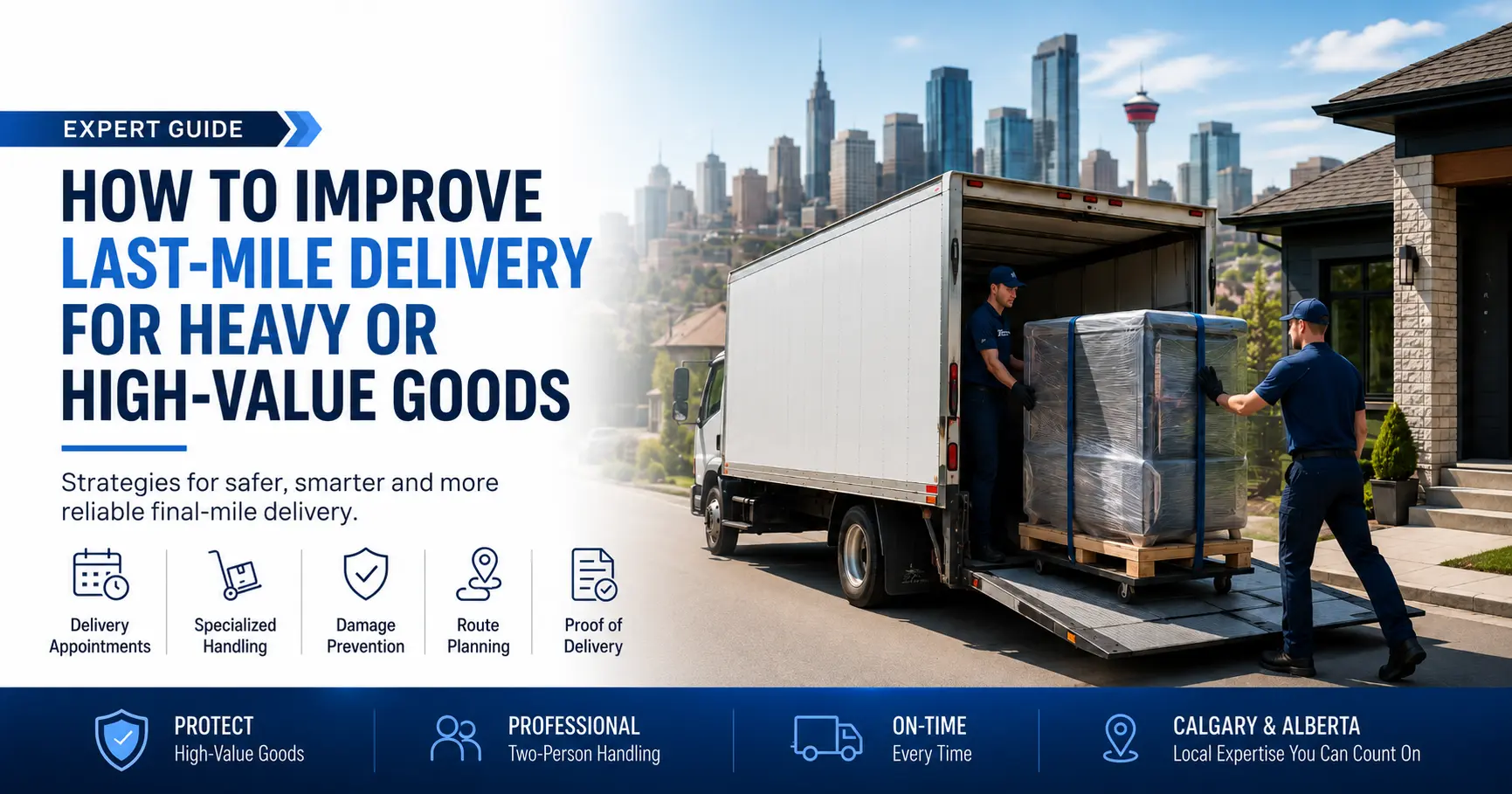
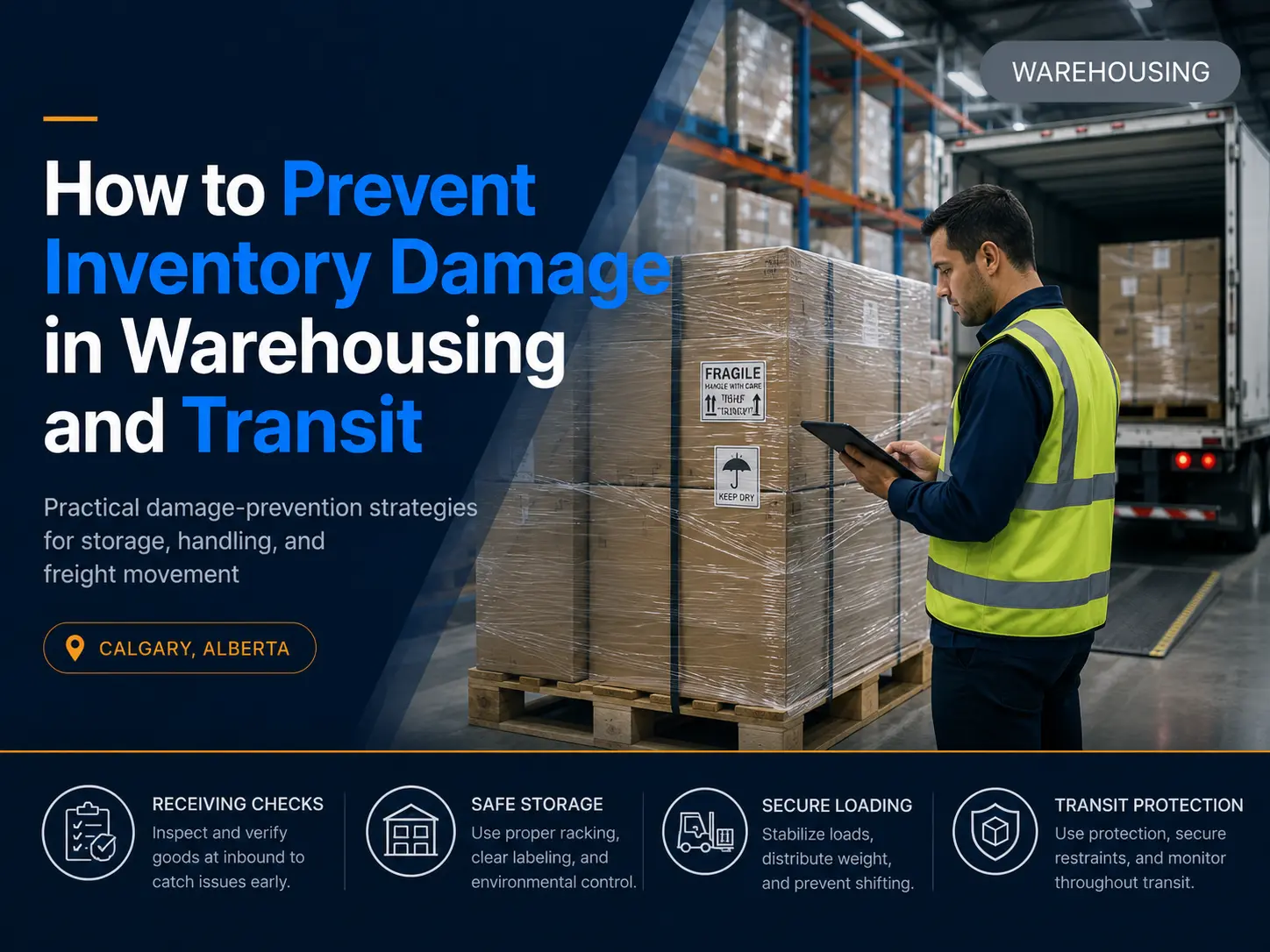
If product damage is already a concern in your operation, review our guide on how to prevent inventory damage in warehousing and transit.
Step 12: Compare Pricing Beyond the Storage Rate
3PL pricing can include many separate activities.
Comparing only the monthly pallet storage rate may therefore produce a misleading result.
Ask every provider to explain how each relevant activity is charged.
| Cost Area | Questions to Ask |
|---|---|
| Receiving | Per pallet, carton, hour, container, or shipment? |
| Storage | Per pallet, bin, shelf, square foot, or cubic volume? |
| Pick & Pack | Per order, unit, line item, carton, or pallet? |
| Packaging | Are cartons, wrap, labels, inserts, and materials separate? |
| Inventory | Are counts, reports, adjustments, or system access charged? |
| Cross-Docking | Per pallet, shipment, hour, or truck? |
| Transloading | What equipment and labour charges apply? |
| Returns | How are inspection, restocking, and disposal charged? |
| Special Handling | Are oversized or fragile goods charged differently? |
| Transportation | Are freight costs quoted separately? |
| Account Fees | Are there setup, administration, minimum, or management fees? |
| Peak Season | Do temporary surcharges apply during high-volume periods? |
Compare Total Logistics Cost
A more useful comparison is:
Total 3PL Cost = Storage + Receiving + Handling + Fulfillment + Packaging + Transportation + Special Services + Administrative Costs
Then consider operational performance.
A provider that charges slightly more per pallet but reduces unnecessary handling, freight coordination, errors, and emergency shipments may produce a lower total logistics cost.
Step 13: Understand Minimums and Contract Terms
Before signing, understand the commercial structure.
Ask about:
- minimum monthly spend
- minimum pallet quantities
- minimum order volumes
- contract length
- renewal terms
- notice periods
- termination fees
- annual rate increases
- peak-season surcharges
- setup fees
- account management fees
- inventory removal fees
Do not evaluate these terms only when you are starting the relationship.
Also consider what happens if:
- your business grows rapidly
- volume falls temporarily
- you launch another product line
- you enter another market
- you need additional services
- you decide to move providers
A flexible relationship is particularly valuable when demand is still changing.
Step 14: Test the 3PL’s Ability to Scale
Your logistics partner should work for the business you expect to become, not just the business you are today.
Ask what happens if:
- inventory doubles
- daily orders triple
- you add hundreds of SKUs
- you win a large wholesale account
- you enter a new province
- you begin importing
- you experience a seasonal surge
- you require additional warehouse space temporarily
A provider may perform well at your current volume but struggle when demand changes.
Ask specifically how capacity is managed during:
- holidays
- seasonal demand
- product launches
- retail promotions
- large inbound shipments
- unexpected overflow
You want to understand the plan before the surge happens.
Step 15: Evaluate Communication and Accountability
Technology matters.
So does being able to get an answer when something goes wrong.
Ask:
- Who is our primary contact?
- Who handles urgent problems?
- How are discrepancies reported?
- How quickly are operational issues escalated?
- How are service changes communicated?
- Are regular performance reviews available?
- Who approves inventory adjustments?
- How are claims or damaged goods handled?
A good logistics relationship requires clear ownership.
If everyone is responsible, sometimes nobody is responsible.
Step 16: Agree on the KPIs That Matter
A 3PL relationship becomes easier to manage when both sides agree on what successful performance means.
Depending on the operation, useful metrics can include:
- inventory accuracy
- receiving accuracy
- order accuracy
- pick accuracy
- on-time shipping
- order turnaround time
- damage rate
- return processing time
- dock-to-stock time
- stock discrepancy rate
Not every business requires every KPI.
Choose measures that reflect the outcomes your customers and operations depend on.
Ask How Performance Is Reviewed
Questions include:
- How often are KPIs reported?
- Who reviews performance?
- What happens when a metric declines?
- How are recurring problems investigated?
- Are corrective actions documented?
The objective is not simply to generate dashboards.
The objective is to use information to improve the operation.
Step 17: Understand the Onboarding Process
A good 3PL relationship can still begin badly if onboarding is rushed.
Before moving inventory, the provider should understand:
- your SKU list
- product dimensions
- pallet configuration
- handling requirements
- inventory counts
- customer requirements
- packaging standards
- shipping methods
- returns procedures
- reporting expectations
- special instructions
A controlled onboarding process reduces confusion after inventory reaches the warehouse.
Prepare Your Business Too
The 3PL is not the only party responsible for successful onboarding.
Before transferring inventory, your business should clean up:
- SKU data
- product descriptions
- weights
- dimensions
- barcodes
- inventory counts
- packaging requirements
- customer shipping rules
- supplier information
Outsourcing a disorganized inventory system simply moves the disorganization into someone else’s warehouse.
18 Questions to Ask Before Choosing a 3PL Partner
Use this list during your provider meetings.
Warehouse and Inventory
- What types of inventory do you regularly handle?
- How is inventory received and verified?
- How do you manage SKU locations and stock accuracy?
- How are damaged goods handled?
- How are cycle counts and inventory adjustments managed?
Fulfillment
- Can you support our B2B, wholesale, retail, or e-commerce order profile?
- How are orders received and processed?
- Can you support kitting, labeling, repacking, or special packaging if needed?
Freight and Distribution
- Can you coordinate LTL, FTL, local delivery, or other transportation?
- Do you provide cross-docking or transloading if our operation requires it?
- What Alberta and Western Canada markets do you regularly support?
Technology
- What inventory visibility and reporting will we receive?
- How are inventory discrepancies and shipping problems communicated?
Pricing
- What charges apply beyond storage?
- Are there minimum monthly volumes or spending requirements?
- Are peak-season, account-management, or special-handling charges separate?
Growth and Support
- How would you accommodate a major increase in inventory or order volume?
- Who will be responsible for our account after onboarding?
The answers should make it easier to compare providers objectively.
3PL Red Flags to Watch For
A provider does not have to be perfect.
But certain warning signs deserve further investigation.
Pricing That Cannot Be Explained Clearly
If you cannot understand how your invoice will be calculated before signing, billing disputes may become difficult later.
No Clear Receiving Process
If the provider cannot explain what happens from truck arrival through inspection and put-away, inventory accuracy may be difficult to control.
Weak Inventory Visibility
If basic questions about inventory require repeated phone calls and manual searches, scaling the relationship may become difficult.
No Defined Escalation Process
Problems happen in logistics.
The important question is what happens next.
There should be a clear route for urgent operational issues.
One Solution for Every Product
Different freight has different requirements.
Be cautious if a provider does not ask about:
- dimensions
- weight
- SKU count
- fragility
- packaging
- order profile
- transportation
- handling needs
A serious logistics provider should want to understand the operation before recommending the solution.
No Discussion About Growth
If a provider only discusses today’s volume, ask what happens when the business changes.
A Practical 3PL Comparison Scorecard
Instead of choosing based on sales presentations, score each provider against the factors that matter most to your business.
| Evaluation Area | Suggested Weight | Provider Score |
|---|---|---|
| Warehouse Fit | 15% | /10 |
| Inventory Management | 15% | /10 |
| Location & Distribution Reach | 10% | /10 |
| Fulfillment Capability | 10% | /10 |
| Transportation Integration | 10% | /10 |
| Specialized Services | 10% | /10 |
| Technology & Visibility | 10% | /10 |
| Pricing Transparency | 10% | /10 |
| Scalability | 5% | /10 |
| Communication & Support | 5% | /10 |
Adjust the weights to match your business.
For example:
An e-commerce brand may place more weight on fulfillment technology.
An importer may place more weight on bonded warehousing and container handling.
An industrial supplier may place more weight on specialized handling and trucking.
A regional distributor may care most about location, pallet handling, transportation, and scalable storage.
There is no universal best 3PL.
There is a best operational fit.
Should You Visit the 3PL Warehouse Before Signing?
For a meaningful warehousing relationship, a facility visit can be extremely useful.
A tour allows you to observe things that are difficult to understand from a proposal.
Look at:
- warehouse organization
- loading areas
- equipment
- pallet condition
- staging
- housekeeping
- employee activity
- freight segregation
- traffic flow
- security
- available space
More importantly, use the tour to discuss your own products.
Ask:
Where would our inventory be stored?
How would this pallet be received?
How would this SKU be picked?
Where would our outbound orders be staged?
How would a damaged product be handled?
Specific operational questions usually produce more useful answers than general sales questions.
Lowest Price vs. Best 3PL Fit
Price matters.
Logistics affects your margins, and businesses should understand exactly what they are paying.
But the lowest quoted warehouse rate does not automatically produce the lowest total cost.
Consider the cost of:
- incorrect inventory
- missed orders
- customer complaints
- product damage
- emergency freight
- repeated warehouse handling
- poor communication
- stockouts
- late retailer deliveries
- switching providers later
The best 3PL relationship should help make the complete supply chain more reliable.
Warehouse pricing is only one component of that result.
When Should You Re-Evaluate Your Current 3PL?
Choosing a 3PL is not necessarily a one-time exercise.
As your business changes, the provider that once fit perfectly may no longer match your operation.
Re-evaluate the relationship when:
- order volume has increased significantly
- inventory regularly exceeds available capacity
- errors are increasing
- customer complaints are growing
- reporting is inadequate
- new sales channels have been added
- you have entered new geographic markets
- you are importing or exporting more frequently
- specialized handling requirements have changed
- transportation has become difficult to coordinate
- pricing is no longer competitive
- communication has deteriorated
Sometimes the solution is changing providers.
Other times, the existing 3PL may simply need a new operating plan.
Start with a performance review before assuming the relationship cannot be improved.
Choosing a 3PL Partner for Alberta Operations
Alberta businesses often have logistics requirements that extend beyond basic storage.
A single supply chain may involve:
- Calgary warehousing
- Edmonton distribution
- Central Alberta deliveries
- industrial freight
- retail replenishment
- e-commerce fulfillment
- containerized imports
- cross-docking
- transloading
- seasonal inventory
- Western Canada transportation
The right partner should understand how these activities connect.
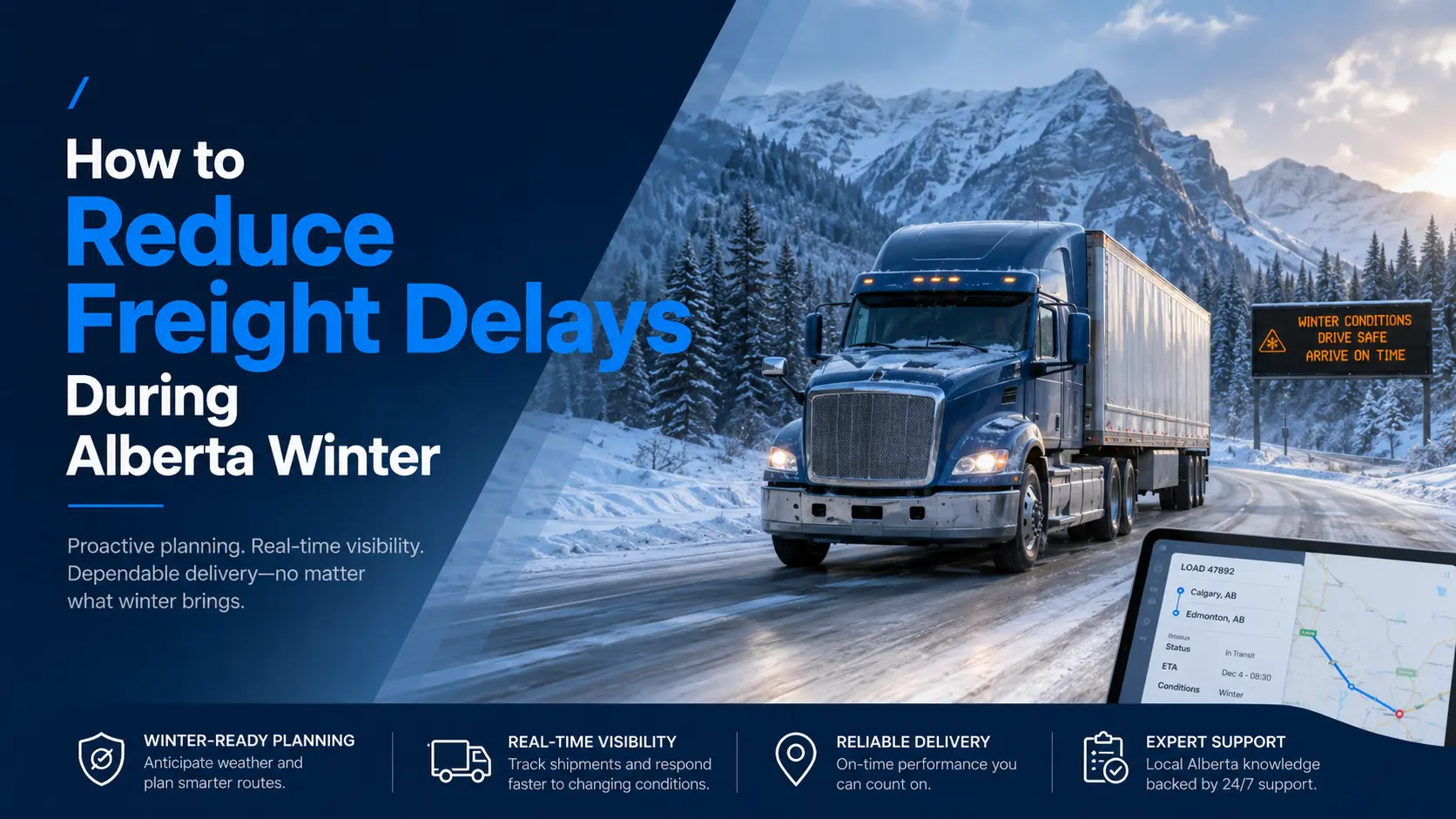
Alberta’s weather should also be part of the conversation. If transportation reliability during colder months affects your supply chain, review our guide on reducing freight delays during Alberta winter.
The objective is to select a provider that fits not only your warehouse requirement but the complete movement of inventory through Alberta and beyond.
Why Businesses Consider Roadway Logistics as an Alberta 3PL Partner
Roadway Logistics provides businesses with access to connected logistics services rather than warehousing alone.
Depending on the operation, businesses can discuss requirements involving:
- 3PL warehousing
- inventory storage
- receiving
- pick and pack
- cross-docking
- transloading
- bonded warehousing
- container handling
- specialized handling
- LTL and FTL freight
- local and regional distribution
That makes it possible to evaluate warehousing and transportation as parts of the same supply chain rather than as completely separate activities.
The most important first step is still understanding your own operation.
A useful 3PL discussion should cover:
What are you storing?
How does it arrive?
How quickly does it move?
Where does it need to go?
What special handling does it require?
What is likely to change over the next 12 to 24 months?
Once those answers are clear, it becomes much easier to determine whether a provider is the right fit.
Businesses evaluating 3PL logistics in Calgary can contact Roadway Logistics to discuss their warehouse, fulfillment, freight, and distribution requirements.
Roadway Logistics
Phone: (587) 350-7615
Email: dispatch@roadwaylogistics.ca
Calgary: 1000 55 Ave NE, Calgary, AB T2E 6Y4, Canada
Request a logistics consultation to discuss your Alberta 3PL requirements.
Frequently Asked Questions About Choosing a 3PL Partner in Alberta
What Is the Most Important Factor When Choosing a 3PL?
The most important factor is operational fit. The 3PL should be capable of handling your inventory type, order profile, storage requirements, freight movements, reporting needs, and expected growth.
Price matters, but it should be compared after confirming that the provider can perform the work correctly.
How Do I Compare 3PL Companies?
Create a consistent scorecard covering warehouse capabilities, inventory management, location, fulfillment, transportation, technology, pricing, scalability, communication, and specialized services.
Give every provider the same operating information and ask them to quote against the same requirements.
What Questions Should I Ask a 3PL Provider?
Ask how inventory is received, stored, tracked, picked, packed, staged, and shipped.
Also ask about pricing, minimums, reporting, transportation, damaged goods, special handling, peak-season capacity, onboarding, account support, and contract terms.
Should I Choose a Local Alberta 3PL or a National Provider?
That depends on your distribution network.
A local Alberta provider may be attractive when a large portion of your inventory, customers, freight, or suppliers are in Alberta or Western Canada.
A national network may be useful when inventory needs to be positioned in multiple distant markets.
Compare the actual freight flow rather than choosing based only on company size.
How Much Does a 3PL Cost?
3PL costs vary according to storage space, receiving, inventory handling, order volume, packaging, special services, technology requirements, and transportation.
Businesses should request a detailed pricing structure rather than comparing only the advertised storage rate.
What Is the Difference Between a Warehouse and a 3PL?
A warehouse primarily provides space for storing goods.
A 3PL can combine storage with additional logistics functions such as inventory management, receiving, fulfillment, transportation, cross-docking, transloading, returns, and distribution.
When Should a Business Change Its 3PL?
A business should consider reviewing alternatives when recurring inventory errors, delays, capacity limitations, communication problems, lack of reporting, unsuitable services, or changing geographic requirements are preventing the current provider from supporting the operation effectively.
Does a 3PL Need a Warehouse Management System?
The exact technology depends on the operation, but businesses should expect clear systems and processes for identifying inventory, recording movements, managing locations, tracking orders, and producing useful inventory information.
The more SKUs, orders, and sales channels involved, the more important structured inventory technology becomes.
Can One 3PL Handle Warehousing and Transportation?
Some 3PL providers connect warehousing with trucking, local distribution, LTL, FTL, cross-docking, transloading, or other freight services.
For businesses that regularly coordinate warehouse and transportation activities, this can reduce the number of separate vendors involved.
How Long Does It Take to Move Inventory to a New 3PL?
The timeline depends on inventory volume, SKU complexity, systems, transportation, labeling, integrations, and operating requirements.
The transition should be planned carefully so inventory remains accurate and customer orders are not disrupted during the move.
Should I Tour a 3PL Warehouse Before Signing a Contract?
For a significant warehousing relationship, a facility tour is highly valuable.
It lets you inspect warehouse organization, equipment, receiving areas, staging space, storage systems, handling processes, and general operational conditions while asking specific questions about how your own products would be managed.