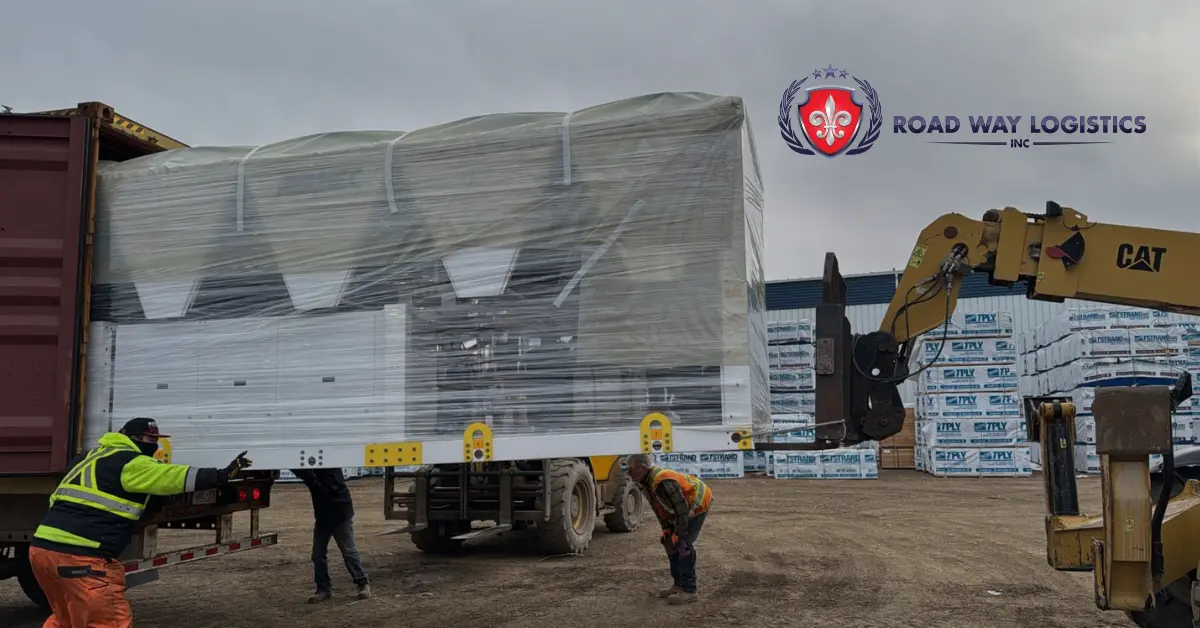
For importers shipping goods through Western Canada, logistics can become complicated quickly. Containers may arrive through ports, rail terminals, or inland freight hubs before they reach the final customer, warehouse, retail location, or distribution centre.
That is where transloading becomes an important logistics solution.
Transloading is the process of transferring freight from one mode of transportation to another. For example, cargo may be moved from an ocean container to a truck, from rail to a dry van, from a container to pallets, or from one trailer type to another. This process helps importers move goods more efficiently through the supply chain.
For companies shipping through Western Canada, especially into Calgary and Alberta, transloading can help reduce transportation costs, improve delivery flexibility, avoid container delays, and make freight easier to distribute across multiple locations.
At Roadway Logistics, we provide transloading, drayage, warehousing, cross-docking, trucking, container handling, and freight distribution services for businesses moving cargo through Calgary and across Alberta.
Whether you are importing retail products, construction materials, industrial goods, machinery, packaged freight, or palletized inventory, transloading can help your supply chain move faster and more efficiently.
What Is Transloading?
Transloading is a logistics process where freight is transferred from one transportation method or equipment type to another before it reaches the final destination.
In simple terms:
Your goods arrive in one type of transport, then they are unloaded, handled, and reloaded into another type of transport for the next part of the journey.
For importers, this often means cargo arrives in an ocean container and is transferred into a truck, trailer, warehouse, or distribution network.
Common Transloading Examples
| Freight Movement | What Happens |
| Container to truck | Imported goods are unloaded from a container and loaded into a truck for local or regional delivery |
| Rail to truck | Freight arrives by rail and is transferred to a truck for final delivery |
| Truck to rail | Goods are moved from a truck into rail equipment for long-distance transport |
| Container to warehouse | Freight is unloaded, sorted, and stored temporarily |
| Container to pallets | Loose-loaded cargo is palletized for easier delivery |
| Bulk shipment to smaller loads | Large shipments are broken down for multiple customers or destinations |
For importers shipping through Western Canada, transloading is useful because goods often move through different transportation networks before reaching the final customer.
Why Transloading Matters for Importers
Importers deal with many moving parts. Freight may come from international suppliers, arrive through Canadian ports, move by rail, transfer through inland terminals, and then require trucking to final destinations.
Without proper coordination, importers can face:
- Container delays
- Higher storage costs
- Demurrage or detention charges
- Missed delivery appointments
- Warehouse congestion
- Poor freight visibility
- Inefficient trucking routes
- Delayed customer deliveries
- Extra handling costs
Transloading helps solve many of these problems by creating a smoother transfer point between inbound freight and outbound delivery.
For Importers, Transloading Can Help With:
- Moving imported containers faster
- Reducing container dwell time
- Preparing cargo for Alberta distribution
- Transferring freight from rail to truck
- Reworking pallets
- Breaking down large shipments
- Consolidating multiple loads
- Supporting LTL and FTL delivery
- Improving regional distribution
- Reducing dependency on long-term storage
For businesses importing into Calgary, Edmonton, Alberta, or Western Canada, transloading can be a practical way to improve freight movement.
How Transloading Works Step by Step
A successful transloading process depends on timing, equipment, trained staff, warehouse space, documentation, and transportation coordination.
Here is how the process usually works:
| Step | Process | Purpose |
| 1. Freight arrives | Cargo arrives by container, rail, truck, or trailer | Starts the transloading process |
| 2. Container or trailer is unloaded | Freight is removed safely using proper equipment | Allows goods to be inspected and prepared |
| 3. Freight is checked | Shipment details, labels, counts, and condition are reviewed | Helps reduce delivery errors |
| 4. Cargo is sorted | Goods are separated by destination, order, customer, or route | Improves delivery planning |
| 5. Freight is prepared | Palletizing, wrapping, labeling, or reworking may be completed | Makes freight ready for transport |
| 6. Goods are reloaded | Cargo is loaded into trucks, trailers, or storage areas | Moves freight to the next stage |
| 7. Final movement begins | Freight is delivered locally, regionally, or across Western Canada | Completes the logistics flow |
The goal is to move goods from one transport mode to another as efficiently as possible.
Transloading vs Cross-Docking vs Warehousing
Many importers hear terms like transloading, cross-docking, drayage, and warehousing. These services often work together, but they are not the same.
| Service | Main Purpose | Best For |
| Transloading | Transfer freight between transport modes or equipment types | Importers moving containers, rail freight, or long-haul cargo |
| Cross-docking | Move freight quickly from inbound to outbound transportation | Goods that need little or no storage |
| Warehousing | Store inventory for short-term or long-term needs | Businesses needing inventory holding or fulfillment |
| Drayage | Move containers over short distances between terminals, warehouses, and facilities | Importers needing container pickup or delivery |
| Freight consolidation | Combine smaller shipments into larger loads | Reducing delivery complexity and improving truck space usage |
For importers, these services often connect.
For example, a container may be picked up through drayage, brought to a Calgary warehouse, transloaded into a dry van, sorted through cross-docking, and then delivered across Alberta.
Why Calgary Is Important for Western Canada Transloading
Calgary is a strong logistics location for importers shipping through Western Canada. It connects Alberta businesses to major road, rail, and regional freight networks.
For companies moving goods through Western Canada, Calgary can support freight movement into:
- Alberta
- British Columbia
- Saskatchewan
- Manitoba
- Northern Alberta
- Western Canada distribution routes
- Local Calgary delivery networks
Because Calgary is centrally positioned for Alberta distribution, many importers use Calgary as a practical inland logistics point for transloading, warehousing, drayage, and trucking.
Calgary Transloading Can Support:
- Import container handling
- Rail-to-truck freight transfer
- Container destuffing
- Container stuffing
- Palletizing and re-palletizing
- Short-term storage
- Cross-docking
- Freight consolidation
- LTL and FTL delivery
- Alberta-wide distribution
- Western Canada shipping lanes
For businesses that import goods and need fast movement into Alberta, Calgary transloading can help simplify the process.
When Should Importers Use Transloading?
Transloading is not required for every shipment, but it is very useful when freight needs to change transportation modes, be prepared for delivery, or move through multiple logistics stages.
Importers should consider transloading when:
- Goods arrive in containers but need truck delivery
- Freight arrives by rail and needs local distribution
- Cargo must be palletized before delivery
- Shipments need to be split across several locations
- Containers need to be unloaded quickly
- Delivery requires LTL or FTL transport
- Freight must be transferred to domestic trailers
- Products need short-term warehousing
- Import cargo needs sorting, labeling, or rework
- The business wants to reduce container delays
- Freight is moving through Western Canada into Alberta
1. When Imported Containers Need to Be Unloaded Quickly
Imported containers can create cost and timing pressure. Once containers arrive, businesses often need to move cargo quickly to avoid delays and extra charges.
Transloading helps by unloading containers and transferring goods into another form of transportation or storage.
Container Transloading Can Include:
- Container unloading
- Container destuffing
- Cargo inspection
- Palletizing
- Sorting by SKU or destination
- Shrink-wrapping
- Labeling
- Load reconfiguration
- Reloading into trailers
- Short-term warehouse staging
This is especially helpful when containers are not the best option for final delivery.
For example, an importer may receive a 40-foot container of products, but the final deliveries need to go to multiple locations in Calgary, Edmonton, Red Deer, and Lethbridge. Instead of moving the full container to every location, the goods can be transloaded and distributed more efficiently.
2. When Freight Arrives by Rail and Needs Truck Delivery
Many goods moving through Western Canada travel by rail for long-distance efficiency. However, rail does not usually complete the final delivery to a customer, store, warehouse, or job site.
Transloading allows goods to move from rail to truck for final delivery.
Rail-to-Truck Transloading Is Useful For:
| Freight Type | Why It Helps |
| Palletized goods | Easy transfer to local trucks |
| Building materials | Supports job site delivery |
| Industrial products | Helps move freight to yards or facilities |
| Retail goods | Supports store and warehouse distribution |
| Bulk shipments | Allows transfer to suitable delivery equipment |
| Machinery or equipment | Helps coordinate final-mile transport |
For importers, this helps connect long-distance rail movement with local and regional trucking.
3. When You Need Container Destuffing in Calgary
Container destuffing is one of the most common services connected with transloading.
Destuffing means unloading cargo from a container. The freight may then be palletized, sorted, stored, inspected, labeled, or loaded into trucks for delivery.
Container Destuffing Is Helpful When:
- Cargo arrives loose-loaded
- Goods need to be separated by customer
- Products need to be palletized
- Freight must be inspected
- The container needs to be returned quickly
- Cargo must be moved into a warehouse
- Shipment volume needs to be split by location
For importers shipping into Alberta, container destuffing in Calgary can help prepare goods for smooth regional distribution.
4. When You Need Container Stuffing for Export or Re-Shipping
Transloading is not only for import freight. It can also help when goods need to be loaded into containers for export, long-distance movement, or re-shipping.
Container stuffing means loading cargo into a container safely and efficiently.
Container Stuffing May Include:
- Loading palletized freight
- Blocking and bracing
- Weight distribution
- Cargo securing
- Shipment organization
- Export preparation
- Documentation support coordination
- Container loading for onward movement
For businesses that both import and export, transloading services can support cargo movement in both directions.
5. When Shipments Need to Be Split Across Multiple Locations
Many importers bring goods into Canada in large volumes, but the final deliveries may need to go to multiple customers, stores, warehouses, or branches.
Transloading makes this easier.
Example
A container arrives in Calgary with products for several Alberta customers.
Instead of sending the full container to one location, Roadway Logistics can help:
- Unload the container
- Sort products by destination
- Separate customer orders
- Re-palletize freight
- Stage outbound loads
- Arrange delivery across Alberta
Multi-Location Distribution Example
| Imported Freight | Transloading Action | Final Delivery |
| One container arrives in Calgary | Cargo is unloaded and sorted | Calgary, Edmonton, Red Deer |
| Mixed SKUs arrive from supplier | Products are separated by customer | Retail stores and warehouses |
| Loose-loaded freight arrives | Goods are palletized | LTL or FTL delivery |
| Large shipment arrives | Freight is split into smaller loads | Alberta-wide distribution |
This helps importers avoid unnecessary handling at multiple locations.
6. When You Want to Reduce Transportation Costs
Transloading can help reduce transportation costs by allowing importers to choose the most efficient transportation method for each stage of the journey.
For example, rail may be cost-effective for long-distance movement, while trucking is better for local or regional delivery. Transloading connects these modes.
Transloading May Help Reduce Costs By:
- Improving truckload utilization
- Reducing empty space in trailers
- Supporting rail-to-truck movement
- Reducing unnecessary container movement
- Consolidating multiple shipments
- Avoiding inefficient delivery routes
- Making freight easier to handle
- Supporting LTL or FTL planning
For importers moving goods through Western Canada, this flexibility can make a major difference.
7. When You Need Freight Consolidation
Freight consolidation is another valuable benefit of transloading.
Sometimes importers receive goods from multiple suppliers or containers. Instead of sending each shipment separately, freight can be consolidated into more efficient outbound loads.
Freight Consolidation Helps With:
- Combining small shipments
- Reducing multiple deliveries
- Improving trailer space usage
- Organizing freight by destination
- Supporting regional delivery routes
- Lowering handling complexity
- Improving shipment visibility
For businesses delivering across Alberta, consolidation can make distribution more efficient.
8. When Your Freight Needs Palletizing or Re-Palletizing
Not all imported freight arrives ready for delivery.
Some containers arrive loose-loaded. Some pallets may need to be rebuilt. Some shipments may need to be separated, wrapped, labeled, or organized for local carriers.
Transloading can help prepare freight properly before it moves to the next destination.
Common Freight Preparation Services
| Service | Purpose |
| Palletizing | Places loose cargo onto pallets for easier handling |
| Re-palletizing | Rebuilds damaged or unsuitable pallets |
| Shrink-wrapping | Helps secure cargo for transport |
| Labeling | Improves order and destination accuracy |
| Sorting | Separates freight by route, customer, or SKU |
| Load reconfiguration | Adjusts freight layout for delivery equipment |
| Staging | Holds freight temporarily before outbound loading |
For importers, these services help reduce delivery issues and make freight carrier-ready.
9. When You Need Short-Term Warehousing
Sometimes freight is not ready for immediate delivery. In that case, importers may need short-term warehousing as part of the transloading process.
Short-term warehousing can help when:
- Delivery appointments are not available yet
- Customers are not ready to receive goods
- Freight needs to be staged by route
- Products require sorting before shipping
- Multiple containers arrive close together
- Final delivery is scheduled for a later date
- Cargo needs temporary storage before distribution
This gives importers more flexibility without committing to long-term warehouse storage.
10. When You Need Drayage and Transloading Together
Drayage and transloading often work together.
Drayage usually refers to short-distance container movement between a rail terminal, port, warehouse, or logistics facility. Transloading happens when the freight is transferred from the container into another transport mode or storage setup.
How Drayage and Transloading Work Together
| Stage | Service |
| Container arrives at terminal | Drayage pickup is arranged |
| Container moves to warehouse | Drayage transport |
| Cargo is unloaded | Transloading begins |
| Freight is sorted or palletized | Warehouse handling |
| Goods are loaded into trucks | Outbound distribution |
| Container is returned | Drayage support |
For importers, working with a provider that can support both services makes the process easier to manage.
Benefits of Transloading for Importers
Transloading provides several important benefits for importers shipping through Western Canada.
| Benefit | How It Helps Importers |
| Faster freight movement | Cargo moves efficiently from containers or rail to trucks |
| Better delivery flexibility | Freight can be routed to multiple destinations |
| Reduced container delays | Containers can be unloaded and returned more efficiently |
| Improved distribution | Goods can be sorted, staged, and delivered across Alberta |
| Lower storage pressure | Freight can move without long-term warehouse dependency |
| Better carrier options | Importers can use rail, truck, LTL, or FTL depending on the shipment |
| Easier freight handling | Cargo can be palletized, labeled, and prepared properly |
| Stronger supply chain control | Importers gain more flexibility over delivery timing and routing |
Types of Freight That Can Use Transloading
Transloading can support many types of freight, depending on equipment, handling requirements, and facility capabilities.
Common Freight Types
- Palletized goods
- Retail products
- E-commerce inventory
- Construction materials
- Packaged food and beverages
- Industrial supplies
- Machinery
- Building materials
- Consumer goods
- Wholesale products
- Import containers
- Bulk shipments
- Crated freight
- Oversized or special-handling cargo
Before scheduling transloading, it is important to confirm freight type, dimensions, weight, handling requirements, delivery locations, and timing.
Industries That Benefit from Transloading in Alberta
Many Alberta industries depend on reliable transloading and freight movement.
| Industry | How Transloading Helps |
| Retail | Moves imported products from containers to stores or warehouses |
| E-commerce | Supports bulk inventory movement and regional distribution |
| Construction | Transfers materials to trucks for job site delivery |
| Manufacturing | Moves raw materials and finished goods between supply chain stages |
| Industrial supply | Helps distribute tools, equipment, and parts |
| Oilfield supply | Supports freight movement to yards, service locations, and field operations |
| Food and beverage | Helps move packaged goods through distribution networks |
| Wholesale distribution | Breaks down large shipments for multiple customers |
For importers in these industries, transloading can reduce complexity and improve delivery planning.
Transloading for Western Canada Shipping Routes
Western Canada freight often moves through a combination of ports, rail, highways, terminals, warehouses, and trucking routes.
Importers may use transloading when shipping through:
- Vancouver
- Prince Rupert
- Calgary
- Edmonton
- Red Deer
- Regina
- Saskatoon
- Winnipeg
- Alberta distribution corridors
- British Columbia to Alberta lanes
- Saskatchewan to Alberta lanes
- Western Canada supply chain routes
Calgary is especially important for businesses that need freight distributed across Alberta after it moves inland from ports or rail networks.
What to Look for in a Calgary Transloading Partner
Choosing the right transloading provider is important. Poor coordination can lead to delays, damaged freight, extra charges, and frustrated customers.
A good transloading partner should offer:
- Calgary transloading services
- Container destuffing and stuffing
- Drayage support
- Warehousing space
- Cross-docking
- Palletizing and re-palletizing
- Freight consolidation
- Trucking and delivery coordination
- LTL and FTL options
- Proper equipment
- Experienced warehouse staff
- Clear communication
- Flexible scheduling
- Local Alberta route knowledge
Importers should also look for a provider that understands the connection between containers, rail, warehouses, trucks, and final delivery.
Why Choose Roadway Logistics for Transloading in Calgary?
Roadway Logistics helps importers and businesses move freight through Calgary and across Alberta with practical logistics solutions.
We support businesses with:
- Transloading
- Drayage
- Container handling
- Container destuffing
- Container stuffing
- Cross-docking
- Warehousing
- Short-term staging
- Palletizing
- Re-palletizing
- Freight consolidation
- Trucking
- Local delivery
- Regional distribution
- 3PL logistics support
Whether your goods are arriving by container, rail, truck, or trailer, our team can help transfer, organize, and move your freight efficiently.
Our goal is to help your business reduce delays, improve freight movement, and simplify the logistics process.
Local Areas We Serve
Roadway Logistics supports importers and businesses across Calgary, Alberta, and Western Canada routes.
| Main Area | Nearby Service Locations |
| Calgary | Airdrie, Balzac, Chestermere, Okotoks, Cochrane, Rocky View County |
| Central Alberta | Red Deer, Olds, Innisfail, Lacombe |
| Edmonton Region | Edmonton, Nisku, Leduc, Sherwood Park, St. Albert |
| Southern Alberta | Lethbridge, Medicine Hat, Brooks, High River |
| Northern Alberta | Fort McMurray, Grande Prairie |
| Western Canada Routes | British Columbia, Saskatchewan, Manitoba shipping connections |
This local structure helps the blog target Calgary and Alberta searches without overloading the content with long city lists.
Common Transloading Services Importers Need
Importers searching for transloading in Calgary or Alberta often need more than a simple freight transfer.
Roadway Logistics can support services such as:
- Container unloading
- Container destuffing
- Container stuffing
- Rail-to-truck transfer
- Truck-to-truck transfer
- Palletizing
- Re-palletizing
- Shrink-wrapping
- Shipment sorting
- Freight staging
- Cross-docking
- Short-term warehousing
- Inventory checks
- Labeling
- Load reconfiguration
- LTL freight preparation
- FTL freight loading
- Drayage coordination
- Regional distribution
- Final-mile delivery coordination
These services help importers move goods through the supply chain more efficiently.
Transloading Checklist for Importers
Use this checklist to decide whether your shipment may need transloading.
| Question | If Yes, Transloading May Help |
| Are your goods arriving in an import container? | Yes |
| Does freight need to move from rail to truck? | Yes |
| Do you need container destuffing? | Yes |
| Do goods need to be palletized? | Yes |
| Are shipments going to multiple locations? | Yes |
| Do you need short-term storage before delivery? | Yes |
| Do you want to reduce container delays? | Yes |
| Do you need drayage and warehouse support? | Yes |
| Are you shipping across Alberta or Western Canada? | Yes |
| Do you need freight consolidation? | Yes |
If several of these apply to your business, transloading may be the right solution.
Final Thoughts
For importers shipping through Western Canada, transloading can be one of the most useful logistics solutions.
It helps move freight from containers, rail, or trailers into the right transportation setup for final delivery. It can also reduce delays, improve distribution, support container handling, and make freight easier to manage across Calgary, Alberta, and Western Canada.
If your business imports goods and needs reliable transloading in Calgary, Roadway Logistics can help.
From container destuffing and drayage to warehousing, cross-docking, trucking, and regional distribution, we provide practical logistics support designed to keep your freight moving.
Need Transloading Services in Calgary or Alberta?
Roadway Logistics provides reliable transloading and freight support for importers shipping through Western Canada.
Contact Roadway Logistics today to discuss your shipment, container handling needs, or Alberta distribution plan.
Roadway Logistics
Website: roadwaylogistics.ca
Phone: (587) 350-7615
Email: dispatch@roadwaylogistics.ca
Services: Transloading, drayage, warehousing, cross-docking, trucking, container handling, freight consolidation, and distribution
Service Areas: Calgary, Edmonton, Alberta, and Western Canada shipping routes
Frequently Asked Questions About Transloading
What is transloading in logistics?
Transloading is the process of transferring freight from one transportation mode or equipment type to another. This may include moving goods from a container to a truck, rail to truck, or trailer to warehouse.
Why do importers use transloading?
Importers use transloading to move goods from containers or rail into trucks, warehouses, or distribution networks. It helps improve delivery flexibility, reduce container delays, and prepare freight for final delivery.
Is transloading available in Calgary?
Yes. Calgary is a practical location for transloading because it connects Alberta businesses to major road, rail, and Western Canada freight routes.
What is container destuffing?
Container destuffing means unloading cargo from an import container. The goods may then be palletized, sorted, labeled, stored, or loaded into trucks.
What is the difference between transloading and drayage?
Drayage is short-distance container movement between terminals, warehouses, and facilities. Transloading is the process of unloading freight and transferring it to another transportation mode or storage setup.
What is the difference between transloading and cross-docking?
Transloading focuses on transferring freight between transportation modes or equipment types. Cross-docking focuses on quickly moving goods from inbound to outbound transportation with little or no storage.
Can transloading help reduce shipping costs?
Transloading can help reduce costs by improving freight routing, supporting rail-to-truck movement, reducing inefficient container movement, and preparing cargo for better delivery planning.
Is transloading useful for LTL freight?
Yes. Transloading can prepare imported cargo for LTL freight by sorting, palletizing, labeling, and staging shipments for regional distribution.