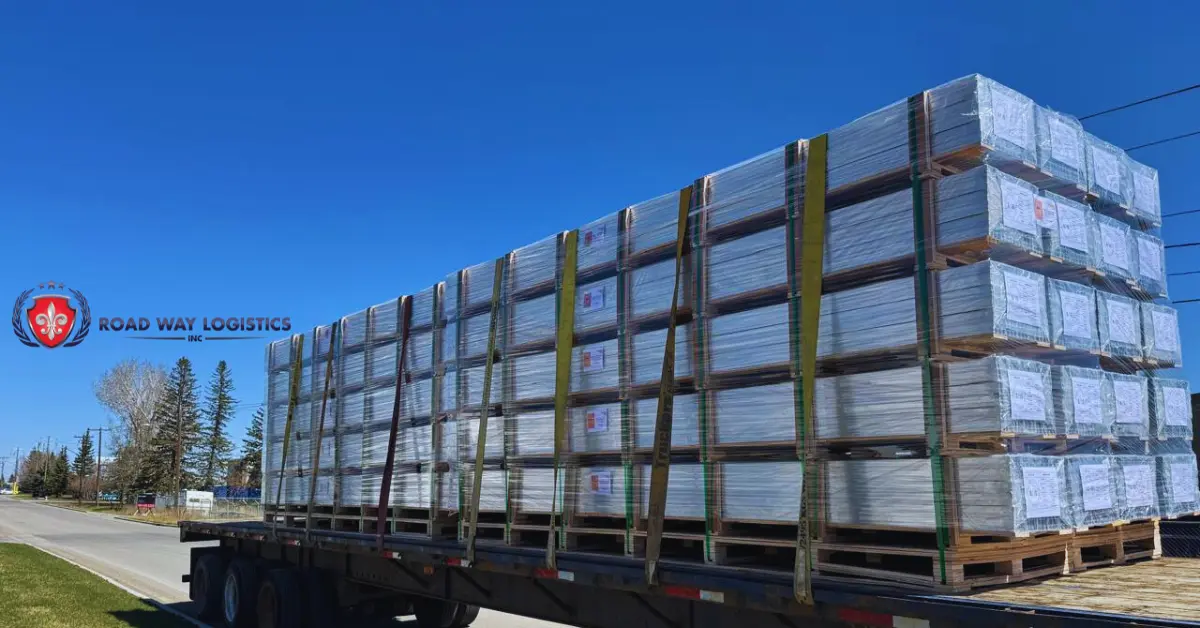
Moving heavy, oversized, fragile, or high-value freight is not the same as shipping regular boxed goods. A standard pallet, crate, or wrap may protect cargo from dust and minor surface damage, but it may not stop the freight from sliding, tipping, rolling, vibrating, or shifting during transport.
That is where blocking and bracing becomes essential.
Blocking and bracing is the process of securing freight inside a trailer, truck, container, or warehouse transfer unit so it stays stable throughout the shipping journey. It uses materials such as wood blocking, braces, chocks, wedges, dunnage, straps, load bars, friction mats, and other cargo securement tools.
For businesses in Calgary and across Alberta, this service is especially important. Alberta companies often move industrial machinery, oilfield equipment, construction materials, manufacturing parts, oversized cargo, sensitive electronics, and containerized freight across long distances. These shipments may travel through city roads, highways, industrial yards, warehouses, rail terminals, and cross-border freight routes.
When cargo is not properly secured, even a short trip can result in damage, delays, safety risks, and expensive claims. Proper blocking and bracing helps prevent these problems before the freight ever leaves the loading area.
Roadway Logistics provides blocking and bracing services in Calgary, Alberta, helping businesses protect heavy, sensitive, and irregular freight with professional handling, transloading, container loading, warehouse support, and cargo securement solutions.
What Is Blocking and Bracing?
Blocking and bracing refers to the methods used to prevent freight from moving during transport. Although the terms are often used together, they have slightly different meanings.
| Term | Meaning | Main Purpose |
| Blocking | Placing materials around the cargo base or sides | Stops sliding, rolling, or shifting |
| Bracing | Supporting cargo from multiple directions | Keeps freight upright and stable |
| Dunnage | Protective or spacing material placed around cargo | Fills gaps and prevents surface damage |
| Chocks/Wedges | Shaped blocks used near wheels or round cargo | Prevents rolling |
| Straps/Load Bars | Securement tools used inside trailers or containers | Holds cargo in place |
In simple terms, blocking stops movement, while bracing adds support.
For example, if a heavy piece of machinery is loaded into a container, blocking may be placed around its base to stop it from sliding. Bracing may then be installed between the machinery and the container walls to keep it stable. Straps, dunnage, or padding may also be added depending on the shipment.
Blocking and bracing is not just about placing wood around freight. It requires understanding cargo weight, center of gravity, contact points, route conditions, equipment type, and handling risks.
Why Blocking and Bracing Matters
Freight is exposed to many forces during transport. A truck may brake suddenly, turn sharply, accelerate, or travel over uneven roads. Containers may be lifted, moved, transferred, stacked, or transported by rail or ocean. Even when cargo looks secure at the loading dock, it can move once the journey begins.
Professional blocking and bracing helps reduce these risks.
| Transport Risk | What Can Happen Without Securement |
| Sudden braking | Freight slides forward |
| Sharp turns | Cargo shifts sideways |
| Road vibration | Sensitive parts become damaged |
| Uneven weight distribution | Load becomes unstable |
| Container handling | Freight impacts walls or other cargo |
| Rolling cargo | Wheels, reels, or cylinders move during transit |
| Poor internal support | Cargo tips, cracks, bends, or breaks |
For heavy freight, movement can create serious damage because of the cargo’s weight and force. For sensitive freight, even minor vibration or impact can cause internal damage that is not immediately visible.
This is why blocking and bracing is not only a shipping task. It is a damage-prevention and safety strategy.
Freight That Needs Blocking and Bracing
Not every shipment needs custom blocking and bracing. However, many heavy, sensitive, oversized, or irregular shipments do.
| Freight Type | Why Blocking and Bracing Is Important |
| Heavy machinery | Prevents tipping, sliding, and base movement |
| Industrial equipment | Protects high-value parts and irregular shapes |
| Oilfield equipment | Secures heavy Alberta energy-sector freight |
| Construction materials | Stabilizes large, awkward, or dense cargo |
| Sensitive electronics | Reduces vibration and movement damage |
| Medical or lab equipment | Protects precision components |
| Metal coils, reels, and rolls | Prevents rolling and side movement |
| Crated freight | Stops crates from sliding inside trailers |
| Containerized cargo | Keeps freight stable during long-distance transport |
| High-value commercial freight | Reduces risk of costly claims |
Businesses should consider blocking and bracing whenever freight is difficult to replace, expensive to repair, unusually shaped, heavy for its size, or vulnerable to movement.
Blocking and Bracing for Heavy Freight
Heavy freight creates special securement challenges. The heavier the cargo, the more force it creates during movement. A machine that shifts even a few inches can damage the trailer floor, container wall, surrounding freight, or the machine itself.
Heavy freight may also have uneven weight distribution. Some equipment is heavier on one side, has a high center of gravity, or includes attachments that make it difficult to stabilize.
Examples of heavy freight that often require blocking and bracing include:
- Manufacturing machines
- Generators
- Compressors
- Pumps
- Skid-mounted equipment
- Fabricated steel
- Construction equipment
- Oilfield components
- Large commercial fixtures
- Industrial parts
For these shipments, proper blocking and bracing may include base blocking, side bracing, chocks, tiedowns, dunnage, and careful weight distribution.
Blocking and Bracing for Sensitive Freight
Sensitive freight does not always look difficult to ship. Some sensitive items are not extremely heavy, but they can be easily damaged by vibration, shock, pressure, or movement.
Examples include:
- Electrical cabinets
- Control panels
- Automation systems
- Telecom equipment
- Medical devices
- Lab instruments
- Computer servers
- Precision tools
- Fragile commercial goods
Sensitive freight may require more than strong blocking. It may need padding, spacing, vibration reduction, careful handling, and protection from direct pressure points.
| Sensitive Freight Risk | Protection Method |
| Vibration | Padding, cushioning, dunnage |
| Internal component damage | Stable positioning and reduced movement |
| Surface scratches | Protective wrapping or soft contact materials |
| Pressure damage | Spacing and weight distribution |
| Tipping | Bracing and base support |
| Impact during transport | Blocking, void fill, and restraints |
For sensitive freight, the goal is not only to hold cargo in place. The goal is to protect the condition and function of the item from pickup to delivery.
Blocking and Bracing vs. Standard Packaging
Many businesses assume that if freight is crated, wrapped, or palletized, it is already secure. That is not always true.
Packaging protects the item. Blocking and bracing secures the item.
| Standard Packaging | Blocking and Bracing |
| Protects against dust and surface scratches | Prevents movement during transport |
| Uses boxes, pallets, crates, or shrink wrap | Uses blocks, braces, dunnage, chocks, and restraints |
| Focuses on product protection | Focuses on load stability |
| May not stop freight from sliding | Designed to stop shifting, rolling, and tipping |
| Useful for general freight | Critical for heavy, sensitive, or irregular freight |
A crate can still slide across a container floor. A pallet can still tip during a sharp turn. A wrapped machine can still vibrate or shift during transport.
The best freight protection often combines both: strong packaging plus professional blocking and bracing.
Common Materials Used in Blocking and Bracing
The materials used depend on the type of freight, weight, dimensions, transport mode, and risk level.
| Material | Common Use |
| Wood blocking | Stops cargo movement at the base |
| Bracing lumber | Provides side, end, or vertical support |
| Chocks | Prevents wheels or round cargo from rolling |
| Wedges | Secures cylindrical or uneven items |
| Dunnage | Fills gaps and protects cargo surfaces |
| Load bars | Holds freight in trailers or containers |
| Straps and tiedowns | Adds restraint and downward force |
| Friction mats | Reduces sliding by increasing grip |
| Void fillers | Fills empty spaces between freight |
| Protective padding | Protects sensitive or finished surfaces |
Professional freight handlers choose materials based on the shipment, not guesswork. Heavy equipment may require stronger blocking and bracing, while sensitive freight may need more protective cushioning and careful spacing.
Professional Blocking and Bracing Process
A proper blocking and bracing job follows a structured process. This helps ensure the cargo is not only loaded, but loaded safely and securely.
| Step | What Happens |
| 1. Freight Assessment | Cargo size, weight, shape, fragility, and value are reviewed |
| 2. Risk Identification | Possible sliding, tipping, rolling, vibration, and impact risks are checked |
| 3. Load Planning | Freight is positioned for balance, stability, and safe handling |
| 4. Material Selection | Blocking, bracing, dunnage, straps, and support materials are chosen |
| 5. Secure Installation | Materials are installed to prevent movement in multiple directions |
| 6. Inspection | The shipment is checked before it moves |
| 7. Documentation Support | Photos or notes may be used for shipment records when needed |
This process is especially important for cargo moving through multiple handling points, such as warehouse transfers, container loading, rail movement, or long-distance trucking.
Blocking and Bracing for Container Shipping
Containerized freight is one of the most common situations where blocking and bracing is needed. A shipping container may travel by truck, rail, and ocean before reaching its destination. During that journey, cargo can be exposed to vibration, lifting, stacking, and repeated movement.
Inside a container, freight can shift if there are open spaces or if the cargo is not properly secured. This can cause product damage, container wall damage, or safety risks during unloading.
| Container Freight Issue | Blocking and Bracing Solution |
| Empty space around cargo | Dunnage or void fillers |
| Heavy cargo at one end | Better weight distribution |
| Machinery sliding | Base blocking and restraints |
| Cargo tipping | Side bracing and support |
| Round freight rolling | Chocks and wedges |
| Mixed cargo movement | Separation, blocking, and load planning |
For Calgary businesses exporting machinery, commercial goods, or industrial parts, professional container stuffing with blocking and bracing can reduce the risk of damage during long-distance shipping.
Blocking and Bracing for Transloading
Transloading means transferring freight from one transportation mode or unit to another. For example, goods may move from a container to a truck, from rail to warehouse, or from one trailer to another.
During transloading, the original securement may no longer be suitable. Freight may need to be reblocked, rebraced, repacked, or repositioned for the next stage of transport.
Roadway Logistics offers transloading support along with blocking and bracing, which is helpful for businesses that need freight handled safely through multiple movement stages.
| Transloading Situation | Why Securement Matters |
| Container to trailer | Cargo must be secured for road movement |
| Trailer to warehouse | Freight must be safely unloaded and staged |
| Warehouse to outbound truck | Load may need new blocking and bracing |
| Mixed freight consolidation | Items need separation and stability |
| Heavy freight transfer | Equipment and load planning are required |
Professional transloading helps reduce damage risks during freight transfers, not just during final transportation.
Blocking and Bracing in Calgary and Alberta
Calgary is an important freight and logistics hub for Alberta. Businesses in the region ship heavy equipment, industrial parts, oilfield materials, construction products, and commercial freight throughout Western Canada and beyond.
Roadway Logistics supports companies in Calgary and surrounding areas that need local freight securement and logistics services.
| Alberta Area | Common Freight Needs |
| Calgary | Warehousing, machinery, commercial freight |
| Airdrie | Distribution, construction, industrial shipments |
| Balzac / Rocky View County | Logistics, storage, container handling |
| Okotoks | Commercial and construction freight |
| Cochrane | Equipment and regional freight movement |
| Red Deer | Oilfield, agriculture, and industrial cargo |
| Edmonton | Heavy freight and manufacturing equipment |
| Lethbridge | Agricultural and commercial shipments |
| Fort McMurray | Energy-sector equipment and heavy cargo |
Local experience matters because Alberta freight often involves heavy-duty equipment, industrial environments, long highway routes, and time-sensitive projects.
Industries That Benefit from Blocking and Bracing
Blocking and bracing is used across many industries. Any company moving heavy, sensitive, oversized, or high-value freight can benefit.
| Industry | Common Freight |
| Construction | Equipment, tools, fixtures, building materials |
| Oil and gas | Pumps, valves, skids, pipes, components |
| Manufacturing | Machinery, production equipment, parts |
| Agriculture | Equipment, attachments, packaged goods |
| Energy | Heavy components, control systems, generators |
| Retail and commercial | Displays, fixtures, large shipments |
| Warehousing | Palletized, crated, and containerized freight |
| Technology | Servers, control panels, electronics |
| Healthcare and labs | Sensitive devices and precision equipment |
In each industry, damage can lead to more than product loss. It can delay projects, disrupt operations, affect customer relationships, and increase costs.
Cost of Poor Freight Securement
Poor freight securement can be expensive. Damage may not only affect the cargo itself, but also the customer, carrier, warehouse, and final delivery timeline.
| Problem | Business Impact |
| Damaged cargo | Repair or replacement cost |
| Missed delivery deadline | Project delays |
| Freight claim | Administrative and financial burden |
| Damaged trailer or container | Extra repair charges |
| Unsafe unloading | Worker safety risk |
| Customer complaint | Reputation damage |
| Product rework | More labour and downtime |
| Shipment rejection | Lost time and added transport costs |
For heavy or sensitive freight, investing in blocking and bracing is often far less expensive than dealing with damage after the shipment arrives.
Why Choose Roadway Logistics?
Roadway Logistics provides professional blocking and bracing services in Calgary for companies that need reliable cargo securement and freight handling support.
| Roadway Logistics Service | Benefit to Your Business |
| Blocking and bracing | Helps prevent freight movement and damage |
| Transloading | Supports freight transfer between transport modes |
| Container stuffing | Prepares cargo for safe container movement |
| Container destuffing | Unloads containers carefully and efficiently |
| Specialized handling | Supports heavy, sensitive, or irregular freight |
| Warehouse services | Provides storage, staging, and shipment preparation |
| Local Calgary support | Helps Alberta businesses move freight efficiently |
Working with one logistics provider can make the process easier. Instead of coordinating separate vendors for warehousing, transloading, securement, and handling, businesses can rely on Roadway Logistics for multiple steps in the freight process.
Signs Your Shipment Needs Blocking and Bracing
You should consider professional blocking and bracing if your shipment has any of these conditions:
| Shipment Condition | Why It Matters |
| Freight is heavy | More force if it shifts |
| Cargo is fragile | Higher risk of damage from vibration or impact |
| Item is irregularly shaped | Harder to secure with standard methods |
| Freight may roll | Needs chocks or wedges |
| Cargo is high-value | Damage would be costly |
| Shipment is going into a container | Longer movement and handling journey |
| Freight will be transloaded | Securement may need to be adjusted |
| Cargo has a high center of gravity | Higher tipping risk |
| Product has sensitive components | Needs movement and vibration control |
When in doubt, it is safer to have the shipment assessed before it moves.
A Word From Roadway Logistics
Blocking and bracing is one of the most important steps in protecting heavy, oversized, fragile, sensitive, or high-value freight. It helps prevent cargo movement, reduces damage risk, improves safety, and supports smoother transportation from pickup to delivery.
For Calgary and Alberta businesses, proper freight securement is especially important because shipments often involve industrial equipment, oilfield parts, construction materials, containerized cargo, and long-distance transport routes.
Roadway Logistics provides professional blocking and bracing services in Calgary, Alberta, along with transloading, warehouse support, container stuffing, destuffing, and specialized freight handling.
Need blocking and bracing in Calgary? Contact Roadway Logistics today to protect your freight before it moves.
FAQ Section
What is blocking and bracing in freight shipping?
Blocking and bracing is the process of securing freight inside a truck, trailer, or shipping container to prevent movement during transportation. It helps stop cargo from sliding, rolling, tipping, or shifting.
Why is blocking and bracing important for heavy freight?
Heavy freight can create significant force when it moves. Proper blocking and bracing helps keep machinery, equipment, and industrial cargo stable during transport.
Does sensitive freight need blocking and bracing?
Yes. Sensitive freight may need blocking and bracing to reduce vibration, impact, pressure damage, and movement during shipping.
What materials are used for blocking and bracing?
Common materials include wood blocking, bracing lumber, chocks, wedges, dunnage, straps, load bars, friction mats, padding, and void fillers.
Is blocking and bracing useful for container shipping?
Yes. Blocking and bracing is very useful for containerized cargo because containers may move through truck, rail, terminal, and ocean transport before reaching the final destination.
Does Roadway Logistics provide blocking and bracing in Calgary?
Yes. Roadway Logistics provides blocking and bracing services in Calgary, Alberta, along with transloading, container stuffing, container destuffing, warehouse support, and specialized freight handling.
What areas does Roadway Logistics serve?
Roadway Logistics supports businesses in Calgary and across Alberta, including areas such as Airdrie, Balzac, Rocky View County, Okotoks, Red Deer, Edmonton, Lethbridge, Fort McMurray, and nearby industrial regions.