Construction is one of Alberta’s most demanding industries — and behind every project on schedule is a supply chain working flawlessly in the background. For construction suppliers, building material distributors, and contractors across Calgary and the rest of Alberta, logistics is not a back-office function. It is the difference between a crew that starts on time and a job site sitting idle while a flatbed of structural steel is stuck somewhere on the Trans-Canada Highway.
This guide covers everything construction suppliers in Alberta need to know about logistics: warehousing and material staging, heavy haul and flatbed freight, job-site delivery coordination, just-in-time scheduling, transloading, cross-docking, and inventory management. Whether you distribute lumber, rebar, drywall, roofing, insulation, structural steel, or heavy equipment, the right logistics partner keeps your materials moving and your customers building.
At Roadway Logistics, we provide construction logistics, warehousing, transloading, cross-docking, and freight services purpose-built for the weight, size, and timing pressures of the construction industry across Calgary and Alberta. If you are a construction supplier looking to reduce delays, cut storage costs, and improve job-site satisfaction, talk to our Calgary logistics team first — we will design a supply-chain solution around your projects, not the other way around.
Why Construction Logistics Is Different — and Harder
Moving construction materials is not the same as moving boxes. Building products are heavy, bulky, oversized, weather-sensitive, and tied to tight installation schedules that leave no room for error. A construction supplier’s logistics challenges are unique, and understanding them is the first step to solving them.
The core challenges construction suppliers and contractors face every day include:
- Managing large quantities of heavy, bulky materials — pallets of brick, bundles of lumber, coils of rebar, sheets of drywall, and structural steel all demand serious space and specialized handling equipment.
- Restricted and changing job-site access — urban builds, tight downtown Calgary lots, and rural project sites all create delivery constraints.
- Coordinating between multiple suppliers to keep a single project on schedule.
- Aligning supplier lead times with installation schedules — materials often arrive weeks before they are needed, creating congestion on active sites.
- Theft and weather damage on open job sites, which drives up material replacement costs and delays.
- Oversized and over-dimensional freight that requires permits, pilot cars, and the right trailers.
- Minimizing waste while adapting to constantly changing project requirements.
When construction logistics is fragmented, delays and cost overruns follow. When it is coordinated under one roof, projects move faster, costs stabilize, and your crews — and your customers — operate with greater confidence.
| Construction Logistics Challenge | The Cost of Getting It Wrong | The Logistics Solution |
|---|---|---|
| Materials arrive weeks early | On-site congestion, damage, theft | Warehousing & sequenced delivery |
| Oversized loads without permits | Fines, delays, safety risk | Heavy haul with permitting & pilot cars |
| No weather-protected storage | Damaged lumber, drywall, fixtures | Secure indoor warehousing |
| Containers of imported materials | Demurrage, handling damage | Transloading & de-stuffing |
| Fast-moving inventory | High storage costs | Cross-docking |
| Inaccurate stock counts | Wrong materials to wrong site | Inventory management & WMS |
Calgary: The Strategic Hub for Alberta Construction Supply Chains
Location matters enormously in construction logistics, and Calgary offers Alberta’s construction suppliers a powerful advantage. The city is widely recognized as Western Canada’s inland port, sitting at the intersection of major highway and rail corridors that connect suppliers to job sites across the province and beyond.
Here is why Calgary is an ideal base for construction logistics:
- Highway connectivity. Calgary sits where the Trans-Canada Highway meets the CANAMEX Corridor, providing fast access to Edmonton, Red Deer, Lethbridge, and the U.S. border — plus the surrounding communities of Airdrie, Cochrane, Chestermere, Okotoks, Strathmore, High River, and Canmore.
- Two Class 1 railroads. Direct access to the CPKC and CN mainlines supports rail-served delivery of heavy and oversized building materials like structural steel, lumber, and prefabricated panels.
- Abundant industrial warehousing. Calgary and Rocky View County continue adding rail-served industrial and warehousing capacity, giving construction suppliers room to store and stage materials cost-effectively.
- Central distribution position. From a Calgary warehouse, materials reach job sites across Western Canada through short, predictable transit lanes — reducing freight costs and protecting delivery windows.
- Weather resilience. Calgary’s inland location and strong infrastructure reduce the supply-chain disruptions that come from coastal port congestion and storms.
For construction suppliers serving Alberta’s busy residential, commercial, industrial, and infrastructure markets, a Calgary logistics base means faster fulfillment, lower transportation costs, and the reliability that keeps contractors coming back.
Warehousing and Material Staging for Construction Suppliers
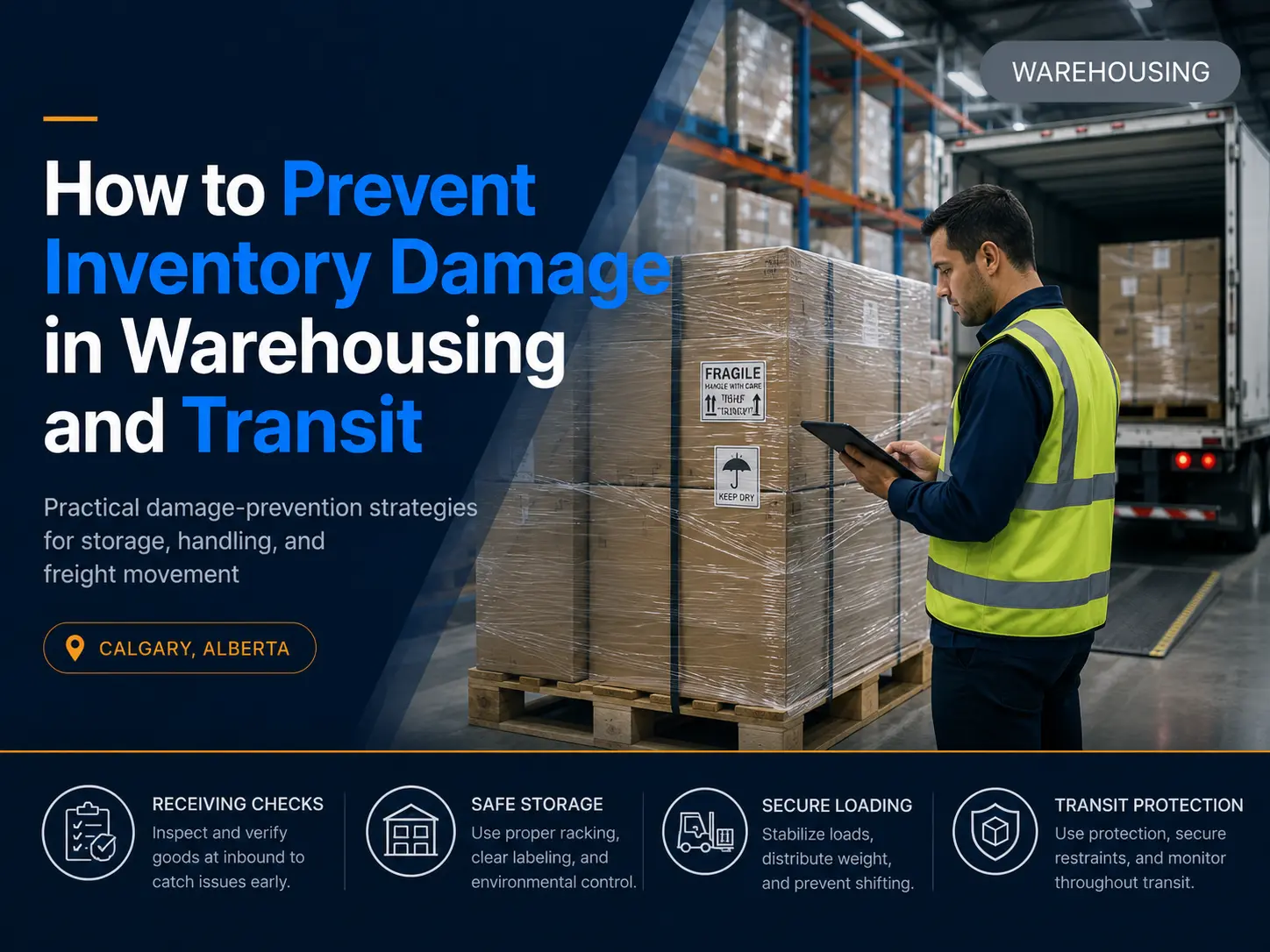
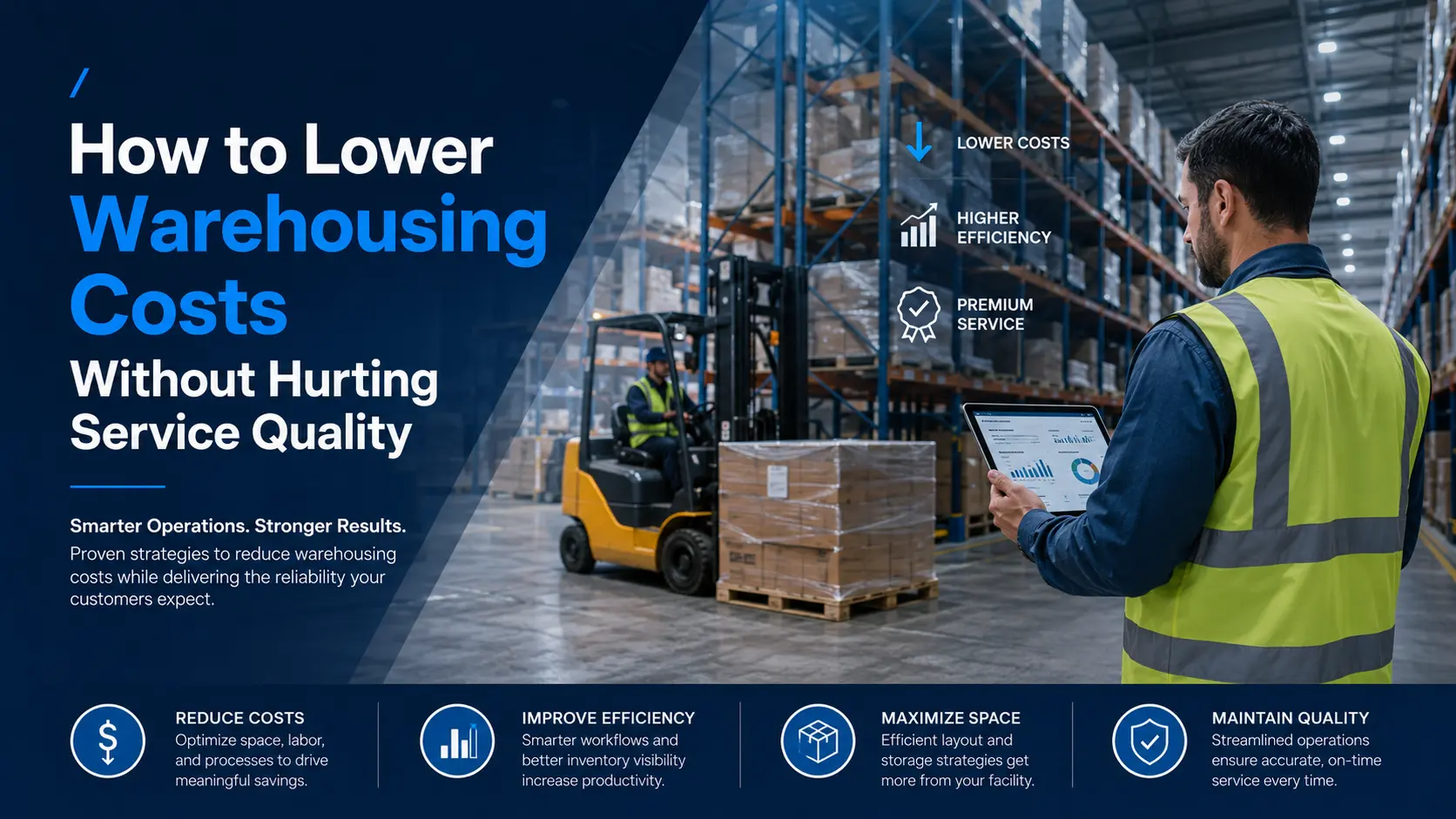
One of the most valuable services a construction supplier can outsource is warehousing. Standard warehouse models often fall short for heavy, oversized building materials — but a construction-ready 3PL solves the storage and staging problems that quietly erode margins and timelines.
Why do construction suppliers and contractors turn to third-party warehousing?
- Secure, weather-protected storage for high-value materials like cabinetry, fixtures, flooring, and finishing products that cannot sit on an open job site.
- Interim storage when supplier lead times do not line up with installation schedules.
- Specialized handling for large-format materials such as structural steel, lumber bundles, roofing, and curtainwall panels that require the right forklifts, racking, and floor space.
- Reduced job-site congestion by holding materials off-site and releasing them in phases.
- Lower theft and weather damage by keeping materials in a controlled, monitored facility until they are needed.
A construction-ready warehouse accommodates the full range of building material categories, each with distinct storage and handling requirements. Lumber is porous and responsive to the elements, so it needs proper indoor protection. OSB and plywood bundles are typically stacked on runners for easy forklift access. Steel and rebar demand serious load-bearing capacity. Insulation and drywall need to stay dry and undamaged.
| Material Category | Storage Consideration | Handling Requirement |
|---|---|---|
| Lumber & framing | Indoor, dry, ventilated | Forklift, runners for bundles |
| Structural steel & rebar | High load-bearing floor | Heavy forklift, overhead lift |
| Drywall & insulation | Weather-protected, flat | Careful palletized handling |
| Roofing materials | Secure, dry | Boom truck for site delivery |
| Cabinetry & fixtures | Secure, climate-aware | White-glove handling |
| Concrete formwork | Racked or stacked | Heavy material handling |
The single most powerful capability a construction 3PL provides is sequenced, schedule-driven delivery. Instead of dumping every material on site at once, a construction-ready logistics partner releases inventory in phases tied to your installation schedule — reducing on-site congestion, protecting materials, and keeping crews productive.
Heavy Haul, Flatbed, and Open Deck Freight for Building Materials
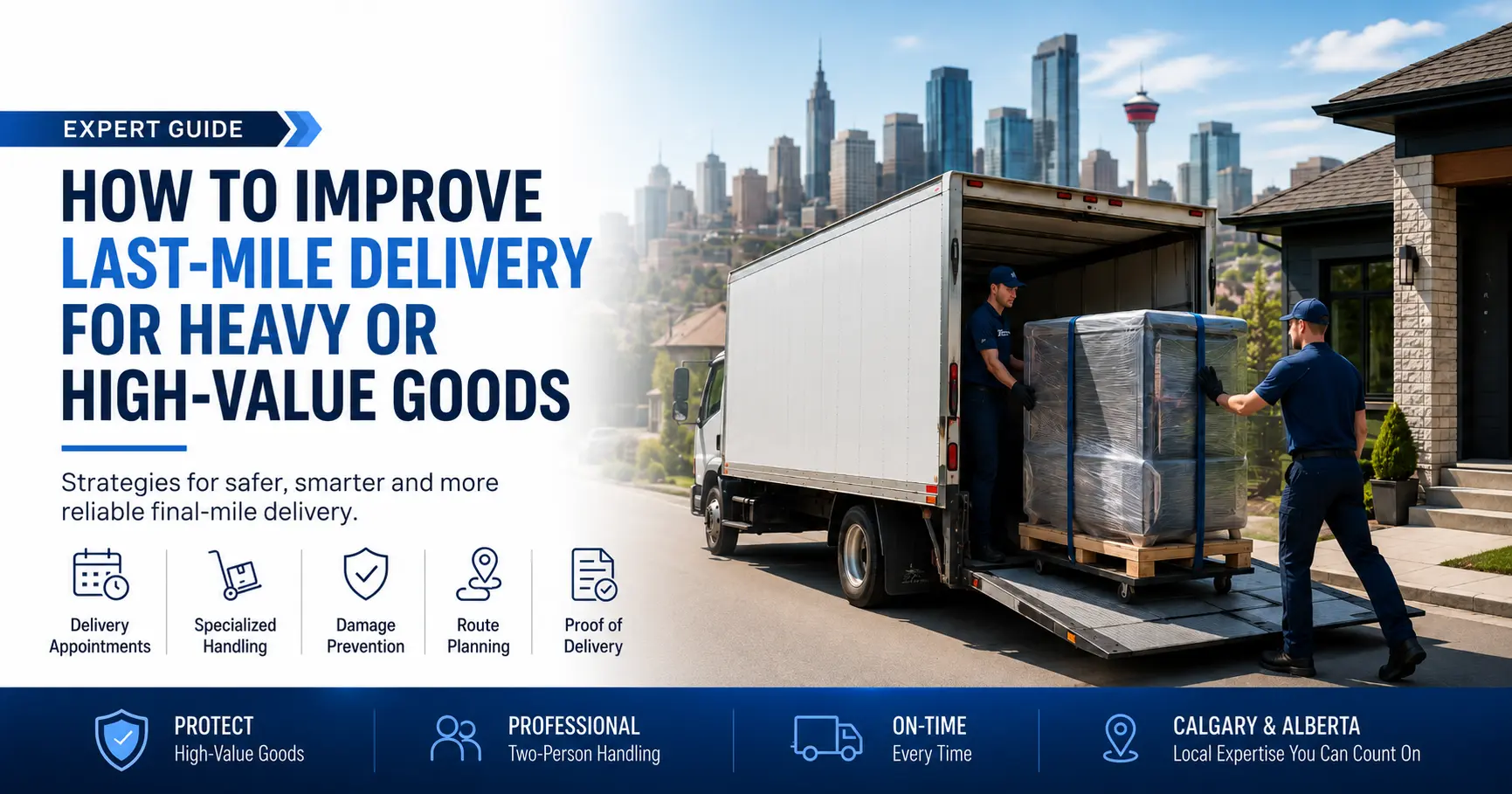
When construction materials are too large, too heavy, or too awkward for a standard dry van, you need open deck and heavy haul freight. This is the backbone of construction transportation in Alberta, and getting it right requires the correct trailer, proper securement, and experienced drivers who understand job-site constraints.
Construction freight in Alberta typically moves on:
- Flatbed trailers for structural steel, skidded goods, palletized materials, and general construction freight.
- Step decks (drop decks) for taller loads that exceed standard flatbed height limits.
- Lowboys and RGNs (removable gooseneck trailers) for heavy equipment like cranes, dozers, loaders, and graders.
- Double drops and extendables for over-dimensional and oversized cargo.
- Super B and B-train configurations for high-volume and heavier bulk loads.
For oversized and over-dimensional freight, the job goes far beyond simply driving from A to B. It requires route studies to identify high-risk pinch points, oversize permits, pilot cars, proper tarping and cribbing, and full compliance with provincial and federal transport regulations. A logistics partner that handles this end-to-end protects your freight, your reputation, and your project timeline.
| Trailer Type | Best For | Typical Construction Load |
|---|---|---|
| Flatbed | General & palletized freight | Structural steel, skidded materials |
| Step deck / drop deck | Tall loads | Equipment, machinery |
| Lowboy / RGN | Heavy equipment | Cranes, dozers, loaders, graders |
| Double drop / extendable | Over-dimensional freight | Oversized panels, long components |
| Super B / B-train | High-volume bulk | Aggregate, heavy bundled materials |
Construction transportation also spans both LTL freight (less-than-truckload) for smaller shipments and FTL freight (full truckload) for large project deliveries. The right logistics partner matches the load to the most cost-effective trailer and shipping mode, eliminating guesswork and reducing your freight spend.
Job-Site Delivery Coordination and Just-in-Time Scheduling
Getting materials to the right job site, at the right time, staged in the right sequence, is where construction logistics either succeeds or fails. Delays cost money — sometimes thousands of dollars per day — and a missed delivery window can idle an entire crew.
Effective job-site delivery coordination involves:
- Scheduling delivery windows in close coordination with foremen, site managers, and project managers.
- Aligning arrivals with crane lifts and crew availability so materials are unloaded safely, quickly, and efficiently.
- Live GPS tracking and proactive communication so crews on the ground always know where their freight is.
- Multi-stop drops and overnight loading for complex projects with phased material needs.
- Adapting to site constraints, from tight downtown Calgary lots to remote rural project sites.
For high-value or schedule-critical materials, the smartest approach is just-in-time delivery supported by staging in a warehouse near the site. This ensures materials are available exactly when needed — even when weather or traffic creates delays — without overcrowding the active job site. Just-in-time logistics is one of the most effective tools a construction supplier can use to improve job-site satisfaction and win repeat business from contractors.
This is also where order kitting and bill-of-materials fulfillment add real value. By combining related SKUs into complete kits delivered together, a construction 3PL makes job-site deployment easier and reduces material loss. Returns and excess inventory from completed phases can be inspected, restocked, and managed rather than written off.
Transloading and Cross-Docking for Construction Materials
Two services that consistently save construction suppliers money are transloading and cross-docking. Both keep materials moving efficiently through the supply chain, and both are core strengths of a full-service Calgary logistics partner.
Transloading means moving freight from one mode or container to another. For construction suppliers importing building materials, heavy machinery, or project cargo, transloading bridges ocean containers and rail cars to local trucks. Materials arriving by rail or container are unloaded, sorted, palletized or bundled, and reloaded onto the trailers that will carry them to the job site. Roadway Logistics provides transloading for building materials, heavy machinery, and project cargo, helping construction and manufacturing clients stay on schedule and within budget.
Cross-docking streamlines the transfer of incoming freight directly to outgoing trucks, minimizing storage time and expediting delivery. Instead of storing materials for long periods, freight is received, sorted, and quickly loaded for outbound delivery to the job site. Cross-docking is ideal for fast-moving construction inventory where speed matters more than long-term storage, and it directly reduces storage costs.
| Service | What It Does | Best For Construction Suppliers When |
|---|---|---|
| Transloading | Moves freight between modes (rail/container to truck) | Importing or rail-shipping bulk materials |
| Cross-docking | Transfers incoming freight straight to outbound trucks | Fast-moving inventory, urgent job-site needs |
| Warehousing | Stores and stages materials | Lead times don’t match install schedules |
| Just-in-time delivery | Releases staged materials on schedule | Tight timelines, limited site space |
By combining transloading and cross-docking with warehousing and trucking, construction suppliers gain a single-source logistics partner instead of juggling multiple vendors — which means fewer handoffs, less handling damage, and lower total cost.
Inventory Management and Supply-Chain Visibility
Inventory is the heart of any construction supply chain, and poor inventory control leads directly to wrong materials arriving at the wrong site, frustrated contractors, and lost business. A disorganized warehouse produces inaccurate stock counts, order errors, and delays.
A modern construction logistics partner solves this with a warehouse management system (WMS) and disciplined inventory processes that deliver:
- Real-time inventory visibility so you always know what is in stock and where it is.
- Precise pick, pack, and dispatch that ensures you deliver exactly what was ordered, to the correct site, on time.
- Reduced inventory loss and theft through secure warehousing and detailed tracking.
- Faster fulfillment during peak periods by scaling space, labor, and transport capacity during construction booms.
- Returns and excess material management to control flow and reduce waste.
- Demand forecasting tools that help you plan inventory around project pipelines.
For construction suppliers, this level of visibility transforms logistics from a source of risk into a competitive advantage. When you can promise contractors accurate, on-time, in-sequence delivery — and actually deliver it — you become the supplier they call first.
Industries and Materials We Support Across Alberta
Roadway Logistics supports the full spectrum of Alberta’s construction and building-products economy. Our construction logistics services serve:
- Building material distributors and suppliers moving lumber, drywall, insulation, roofing, and hardware
- Commercial and residential builders needing reliable, sequenced job-site delivery
- Structural steel and rebar suppliers requiring heavy haul and specialized handling
- Contractors and developers managing multi-phase projects across Calgary and Alberta
- Heavy equipment and machinery dealers and rental companies
- Infrastructure and public works projects with oversized freight needs
- Manufacturing and fabrication operations producing prefabricated components
We handle a wide range of building supplies — including lumber, cement, bricks, steel, rebar, roofing materials, insulation, drywall, plumbing fixtures, electrical components, and concrete formwork — with the secure storage, specialized equipment, and freight capacity each category demands.
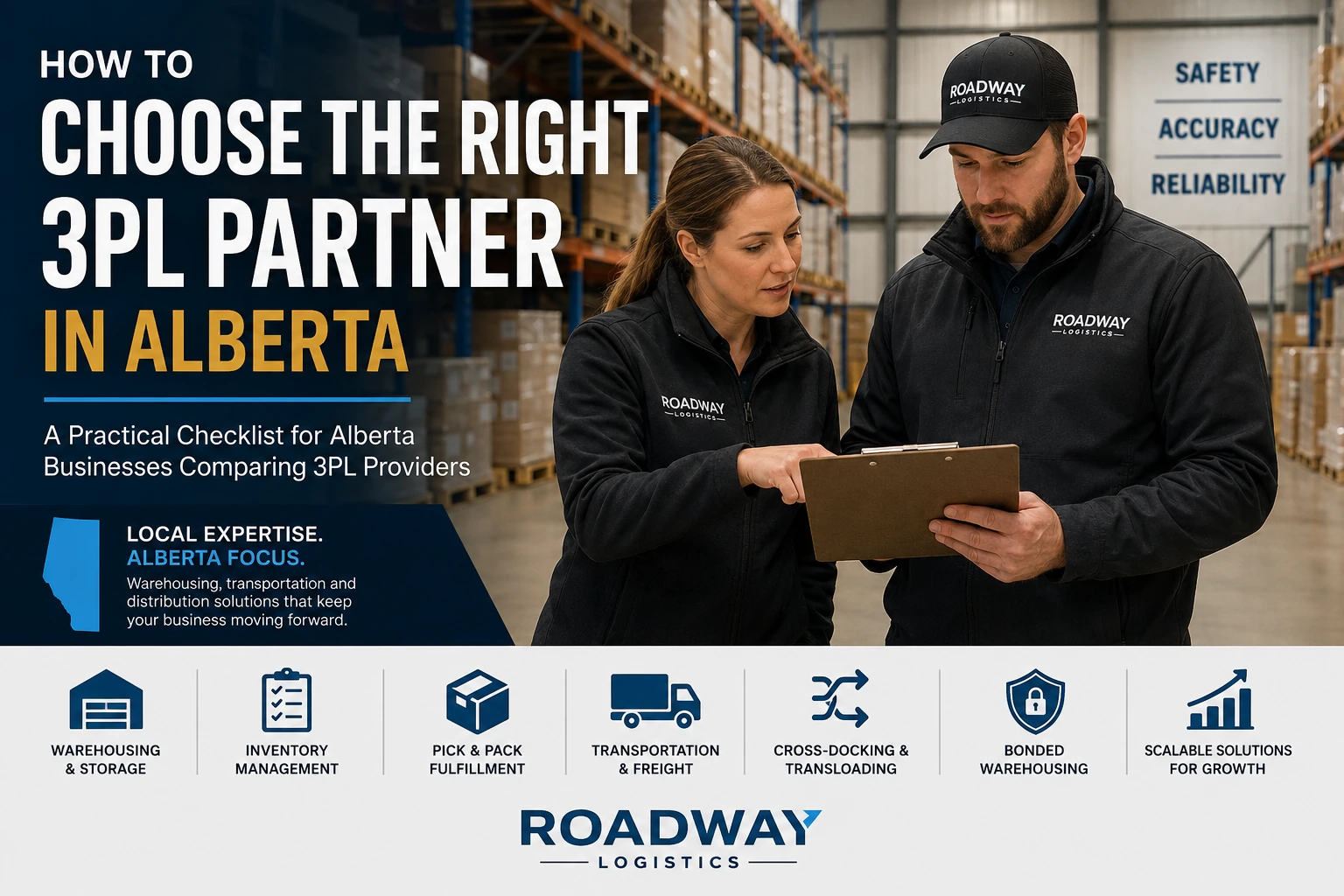
How to Choose a Construction Logistics Partner in Alberta
Choosing the right logistics partner is one of the most important decisions a construction supplier makes. The wrong choice creates delays, damaged materials, and unhappy contractors. The right one becomes an extension of your business. Here is what to evaluate:
- Construction-specific experience. Look for a partner whose warehouses, equipment, and freight systems are purpose-built for the weight and size of construction inventory — not a generic 3PL.
- Full-service capability. A single provider offering warehousing, transloading, cross-docking, heavy haul, flatbed freight, and last-mile job-site delivery eliminates handoffs and reduces cost.
- Calgary and Alberta presence. Local expertise means your partner understands regional distribution lanes, job-site conditions, and the communities you serve.
- Sequenced delivery capability. The ability to stage materials and release them on your installation schedule is the single most valuable service for construction projects.
- Inventory visibility. A modern WMS gives you real-time control of stock and accurate fulfillment.
- Scalability. Flexible space, labor, and transport capacity let you handle peak construction season without paying for unused capacity year-round.
- Safety and compliance. For oversized freight, confirm your partner manages permits, pilot cars, route studies, and provincial and federal transport regulations.
| Selection Criteria | Why It Matters | Roadway Logistics |
|---|---|---|
| Construction-ready facilities | Handles heavy, bulky materials | ✔ Built for construction freight |
| Full-service under one roof | Fewer handoffs, lower cost | ✔ Integrated 3PL services |
| Calgary & Alberta expertise | Knows local lanes & sites | ✔ Calgary & Edmonton based |
| Sequenced job-site delivery | Reduces site congestion | ✔ Schedule-driven delivery |
| Heavy haul & flatbed fleet | Moves oversized loads safely | ✔ Open deck & heavy haul |
| Inventory management system | Accurate, on-time fulfillment | ✔ WMS-driven visibility |
Build a Stronger Construction Supply Chain With Roadway Logistics
In construction, logistics is not a cost center — it is a competitive advantage. The suppliers and contractors who win in Alberta’s busy market are the ones whose materials arrive on time, in sequence, undamaged, and ready for the day’s work. That reliability is built on a logistics partner who understands the unique demands of construction.
At Roadway Logistics, we bring together construction-ready warehousing, material staging, transloading, cross-docking, heavy haul and flatbed freight, and sequenced job-site delivery — all under one roof, all based right here in Calgary. As a locally owned Alberta logistics company, we understand the weight, size, and timing pressures of the construction industry, and we design supply-chain solutions that keep your projects moving and your customers building.
Before your next project ramps up, talk to us first. Our Calgary construction logistics team will help you plan your warehousing and staging, coordinate heavy haul and flatbed transport, set up just-in-time job-site delivery, and gain full visibility over your inventory from arrival to final mile.
Contact Roadway Logistics today to build a faster, more reliable, and more cost-effective construction supply chain across Calgary, Alberta, and Western Canada. Let us be the logistics partner that keeps your job sites running.
Roadway Logistics — Warehousing, transloading, cross-docking, heavy haul, flatbed freight, and job-site delivery for construction suppliers across Calgary, Alberta, and Western Canada.
Common Questions From Construction Suppliers in Alberta
What is construction logistics? Construction logistics is the coordination, transport, warehousing, and timed delivery of building materials, equipment, and prefabricated units to job sites. It includes heavy haul and flatbed freight, oversize load handling, material staging, permitting, and sequenced delivery scheduling — all essential to keeping projects on track.
Do you handle oversized and over-dimensional loads? Yes. We move oversized and over-dimensional construction freight using flatbeds, step decks, lowboys, RGNs, and extendable trailers, with full permitting, route planning, and pilot car coordination where required.
Can you store construction materials and deliver them on our schedule? Absolutely. Our warehousing and sequenced, just-in-time delivery let us hold your materials in a secure facility and release them in phases tied to your installation schedule — reducing on-site congestion and protecting high-value materials.
What types of building materials can you warehouse and transport? We handle lumber, structural steel, rebar, drywall, insulation, roofing, concrete formwork, cabinetry, fixtures, plumbing and electrical components, hardware, heavy equipment, and project cargo — each with the appropriate storage and handling.
What areas do you serve? Roadway Logistics serves Calgary, Edmonton, and construction projects across Alberta and Western Canada, including Airdrie, Cochrane, Chestermere, Okotoks, Strathmore, High River, and surrounding communities.
Why outsource construction logistics instead of handling it in-house? Outsourcing to a construction-ready 3PL gives you scalable warehouse space, specialized equipment, a full freight fleet, and inventory visibility without the capital cost — improving delivery accuracy, reducing loss and theft, and increasing job-site satisfaction.