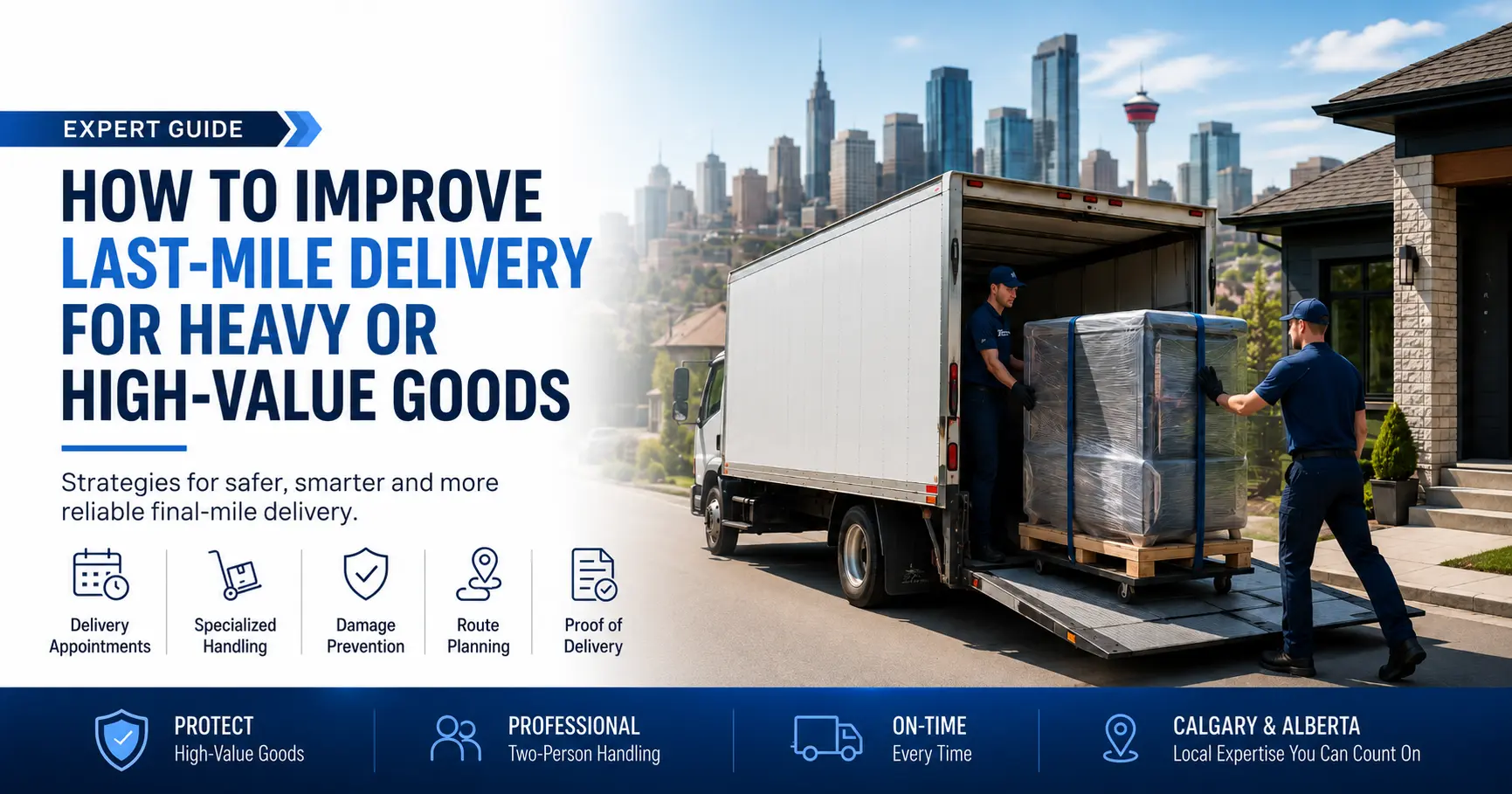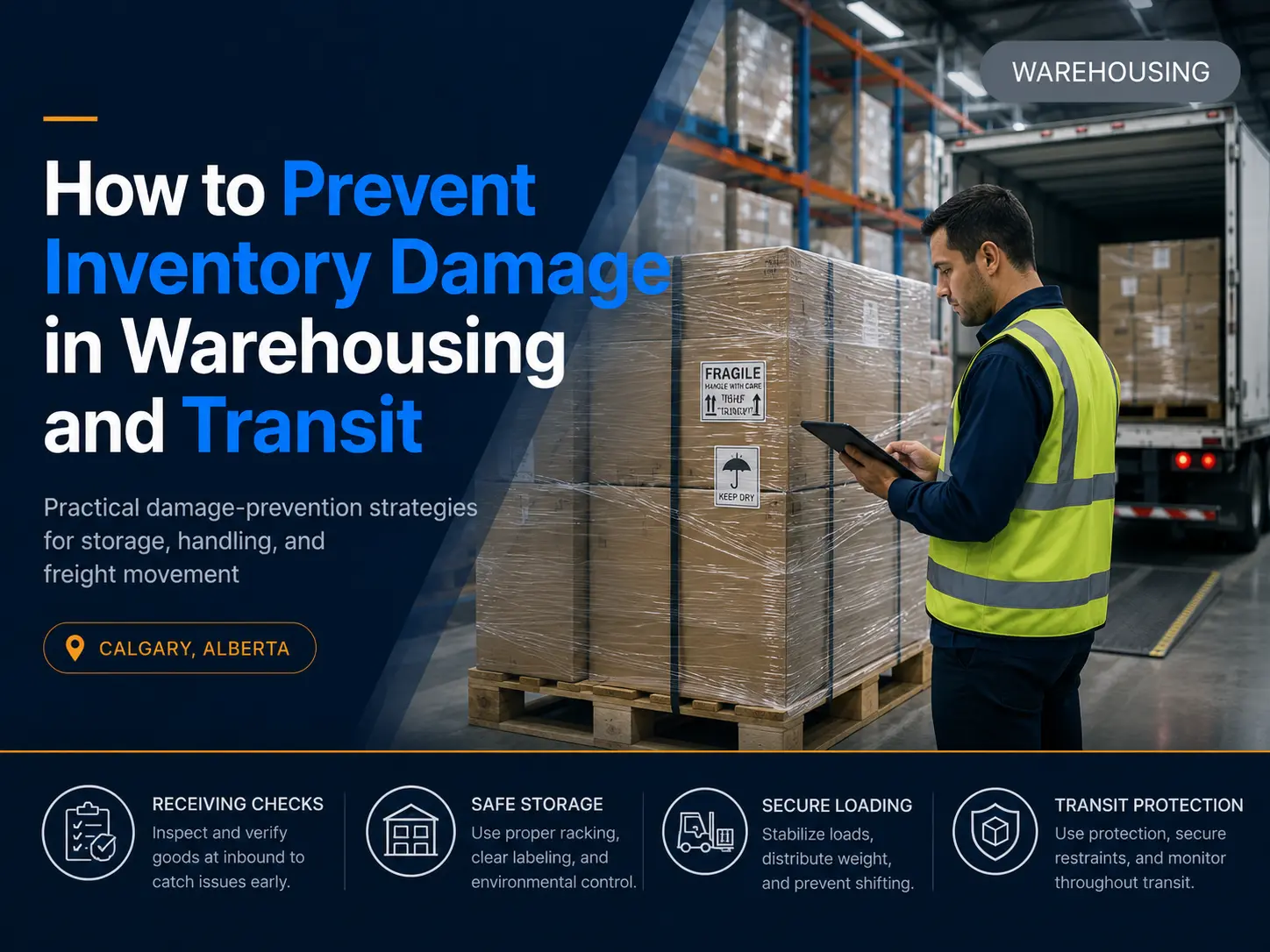
Outbound fulfillment is the process that turns a customer order, sales order, or warehouse request into a picked, packed, shipped, and delivered order. It starts when a pick ticket is created and ends when the shipment reaches the customer, store, job site, warehouse, or business location.
For businesses using a 3PL warehouse in Calgary, outbound fulfillment is one of the most important parts of the supply chain. Inventory may be stored properly, but the real value comes when the right products leave the warehouse accurately, on time, and in good condition.
A professional outbound fulfillment process includes order review, pick ticket generation, inventory allocation, warehouse picking, packing, labeling, staging, loading, shipping documentation, carrier handoff, local trucking, and delivery confirmation. NetSuite describes outbound logistics as including customer order, order processing, replenishment, picking, packing, staging and loading, shipping and documenting, and last-mile delivery.
For companies in Calgary and across Alberta, outbound fulfillment may involve ecommerce orders, B2B pallet shipments, retail replenishment, industrial parts, construction materials, commercial freight, LTL shipping, FTL freight, local cartage, final-mile delivery, or regional distribution.
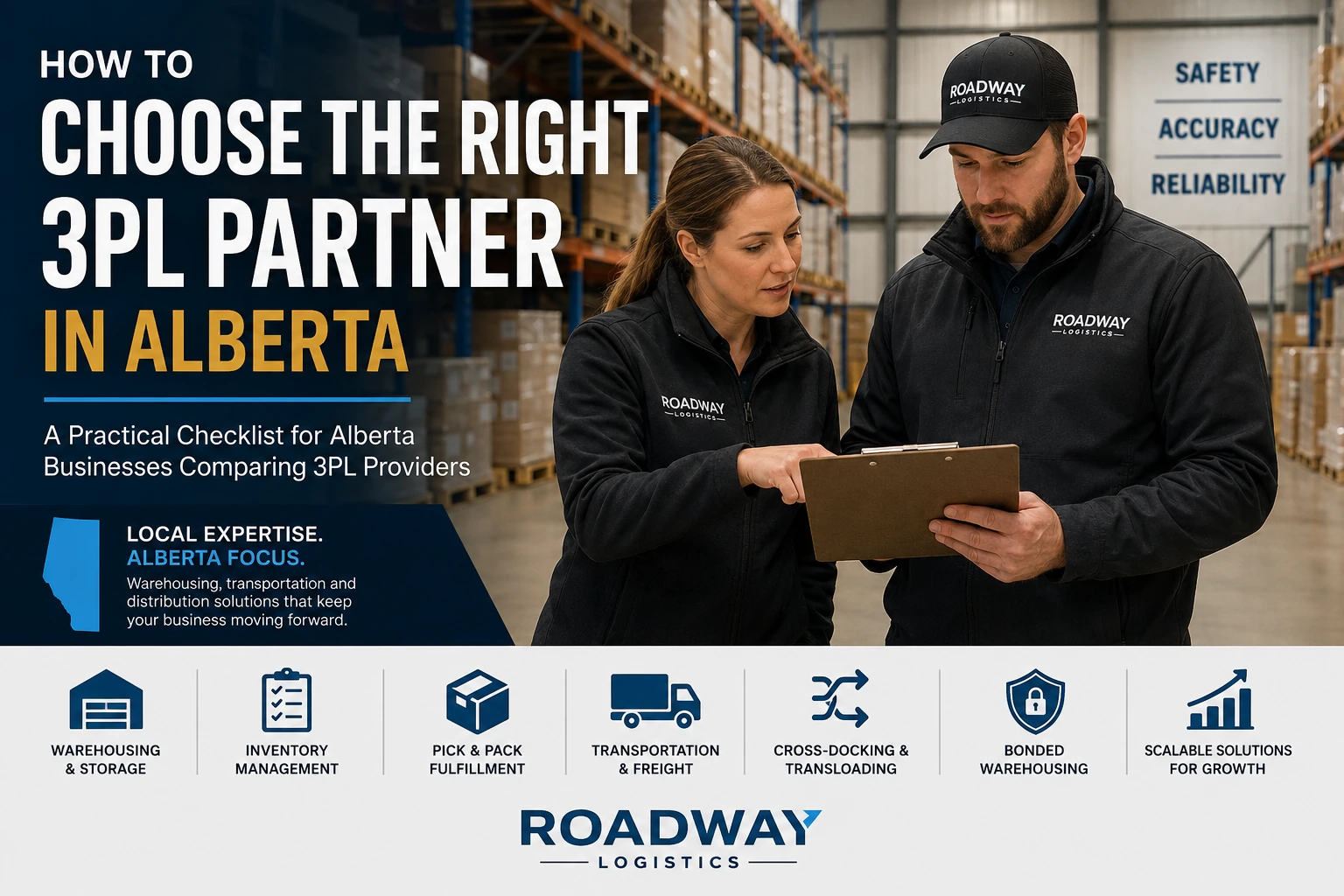
Roadway Logistics provides pick and pack services in Calgary, along with 3PL warehousing, fulfillment, cross-docking, transloading, LTL, FTL, cartage, and trucking support for businesses that need reliable warehouse and freight movement.
What Is Outbound Fulfillment?
Outbound fulfillment is the warehouse process of preparing goods to leave a facility and move to the final destination. It begins after an order is received and confirmed. The warehouse team then locates the inventory, picks the correct items, packs or prepares the shipment, stages it for pickup, loads it onto the right carrier or truck, and confirms shipment details.
| Outbound Fulfillment Step | What It Means |
| Order received | A customer, retailer, business, or internal team places an order |
| Pick ticket created | Warehouse receives instructions for what to pick |
| Inventory allocated | Stock is reserved for that order |
| Picking | Warehouse staff locate and collect the items |
| Packing | Items are packed, wrapped, labelled, or palletized |
| Quality check | Order is reviewed for accuracy and condition |
| Staging | Shipment is placed in the correct outbound area |
| Loading | Freight is loaded onto the correct vehicle |
| Shipping | Goods leave the warehouse |
| Delivery confirmation | Shipment reaches the receiver |
Outbound fulfillment is where inventory management, warehouse operations, transportation, and customer service come together.
What Is a Pick Ticket?
A pick ticket is a warehouse instruction document or digital task that tells staff which items to pick for an order. It usually includes product names, SKU numbers, quantities, storage locations, order numbers, customer information, and any special handling instructions. A logistics glossary defines a pick ticket as a document that lists the items, quantities, and storage locations required to fulfill a customer order from a warehouse.
| Pick Ticket Detail | Why It Matters |
| Order number | Connects the pick to the correct customer or shipment |
| SKU number | Identifies the exact product |
| Quantity | Shows how many units to pick |
| Bin or rack location | Helps staff find the product quickly |
| Product description | Helps confirm the item visually |
| Lot or serial number | Supports traceability when required |
| Special instructions | Notes fragile, heavy, urgent, or custom requirements |
| Shipping method | Helps plan packing and staging |
A pick ticket can be printed on paper or generated digitally through a warehouse management system. Digital pick tickets are often preferred in high-volume 3PL environments because they can update inventory faster, reduce manual errors, and connect with order management systems.
Why Outbound Fulfillment Matters for Businesses Using a 3PL
When a business outsources warehousing and fulfillment to a 3PL, the outbound process becomes the main connection between stored inventory and customer satisfaction. The customer does not see the receiving dock or storage racks. They see whether the order arrives correctly, on time, and in good condition.
| Outbound Fulfillment Problem | Business Impact |
| Wrong item picked | Customer complaint, return, replacement cost |
| Delayed picking | Missed delivery window |
| Poor packing | Product damage during transport |
| Wrong shipping label | Misdelivery or carrier delay |
| Poor staging | Freight loaded on wrong truck |
| Missing documentation | Delivery or receiving issues |
| Inventory not updated | Overselling or stock confusion |
| No delivery confirmation | Customer service problems |
A strong 3PL fulfillment process helps reduce errors, improve delivery speed, and support customer trust. Roadway Logistics’ 3PL Calgary page highlights advanced warehouse management and order fulfillment systems, flexible solutions, local expertise, and customer-centric support.
Outbound Fulfillment Workflow: Pick Ticket to Delivery
A professional 3PL facility follows a structured outbound workflow. The details may vary depending on whether the shipment is ecommerce, B2B, palletized, LTL, FTL, or local delivery, but the core steps remain similar.
| Step | Process | Goal |
| 1. Order entry | Order enters the system | Start fulfillment accurately |
| 2. Order validation | Details are checked | Prevent errors before picking |
| 3. Inventory allocation | Stock is reserved | Avoid overselling |
| 4. Pick ticket generation | Warehouse receives picking instructions | Guide staff to correct products |
| 5. Picking | Items are collected | Build the order |
| 6. Packing | Items are protected and prepared | Prevent damage |
| 7. Quality check | Order is verified | Improve accuracy |
| 8. Labeling and documentation | Labels and paperwork are prepared | Support shipping |
| 9. Staging | Shipment waits in outbound area | Organize carrier pickup |
| 10. Loading | Freight is loaded | Move order out safely |
| 11. Delivery | Shipment reaches destination | Complete order cycle |
| 12. Confirmation | Delivery status is updated | Provide visibility |
C3 Solutions explains that a 3PL process flow includes inbound scheduling, receiving, storage, order fulfillment, outbound shipping, returns, and system integrations, with the 3PL often executing physical warehouse work through a WMS while the shipper’s system manages order and inventory data.
Step 1: Order Entry and Order Validation
Outbound fulfillment starts when an order enters the warehouse system. This may happen through an ecommerce platform, ERP, customer portal, email instruction, B2B purchase order, or direct order request.
Before the warehouse team starts picking, the order should be validated.
| Order Validation Check | Why It Matters |
| Customer details | Confirms delivery name and address |
| SKU accuracy | Ensures order contains valid products |
| Quantity | Confirms required units |
| Inventory availability | Checks whether stock is available |
| Shipping method | Confirms carrier or delivery type |
| Special instructions | Notes fragile, urgent, white glove, or appointment requirements |
| Delivery deadline | Helps prioritize orders |
| Payment or release status | Confirms order can be shipped |
For Calgary businesses, order validation is especially important when shipments are going to retail locations, job sites, industrial facilities, construction projects, or regional Alberta customers with appointment-based receiving.
Step 2: Inventory Allocation
Inventory allocation means reserving stock for a specific order. Once inventory is allocated, it should not be used for another order unless the first order is cancelled or changed.
| Inventory Status | Meaning |
| On hand | Physically stored in the warehouse |
| Available | Ready to sell or ship |
| Allocated | Reserved for an order |
| Picked | Removed from storage for fulfillment |
| Packed | Prepared for shipment |
| Shipped | Left the warehouse |
| Backordered | Not available yet |
This step helps prevent overselling. It also gives the warehouse team a clear picture of which products are available for future orders.
A warehouse management system can support real-time inventory updates, order tracking, picking, packing, and reporting. 3PL software is commonly used to streamline order fulfillment, warehousing, transportation, inventory updates, and shipment visibility.
Step 3: Pick Ticket Generation
Once the order is validated and inventory is allocated, the system generates a pick ticket. This pick ticket tells the warehouse team exactly what to pick and where to find it.
| Pick Ticket Type | Best For |
| Paper pick ticket | Simple or low-volume operations |
| Digital pick ticket | Faster 3PL and ecommerce fulfillment |
| Batch pick ticket | Multiple orders with similar SKUs |
| Zone pick ticket | Orders split by warehouse area |
| Wave pick ticket | Orders grouped by carrier, cutoff time, or route |
| Pallet pick ticket | B2B or wholesale pallet movement |
The quality of the pick ticket affects the quality of the order. If the pick ticket is unclear, incomplete, or based on inaccurate inventory data, the risk of errors increases.
Step 4: Order Picking
Order picking is the process of locating and collecting the correct items from warehouse storage. It can involve picking individual units, cartons, cases, pallets, or full freight loads.
| Picking Method | How It Works | Best For |
| Piece picking | One item or unit is picked at a time | Ecommerce and small orders |
| Case picking | Full cases or cartons are picked | B2B and wholesale |
| Pallet picking | Full pallets are selected | Bulk distribution |
| Batch picking | Similar items for multiple orders are picked together | High-volume fulfillment |
| Zone picking | Workers pick only from assigned warehouse zones | Larger warehouses |
| Wave picking | Orders are picked in scheduled waves | Carrier cutoffs or route planning |
Order picking is a key warehouse activity because it directly affects fulfillment accuracy. ShipHero describes order picking as the activity of pulling individual items from a fulfillment center to create an order and notes that it is a major warehouse cost area, making optimization important.
For businesses using Roadway Logistics’ pick and pack services in Calgary, accurate picking helps ensure orders are prepared correctly before packing and delivery.
Step 5: Packing and Shipment Preparation
After picking, the order moves to packing or shipment preparation. Packing may look different depending on the type of order.
An ecommerce order may need a box, filler, label, and courier pickup. A B2B order may need carton consolidation, pallet wrapping, freight labels, and LTL paperwork. Industrial freight may need blocking, bracing, special handling, or staging for dedicated trucking.
| Shipment Type | Packing or Preparation Need |
| Ecommerce parcel | Box, filler, label, packing slip |
| B2B carton order | Carton verification, label, staging |
| Pallet shipment | Palletizing, wrapping, labels |
| LTL freight | Pallet labels, BOL, carrier staging |
| FTL freight | Load planning and trailer preparation |
| Fragile freight | Protective packaging and handling notes |
| High-value goods | Verification and secure preparation |
| Heavy freight | Equipment, safe handling, and load planning |
Packing is not just about appearance. It protects the order, supports carrier handling, and reduces the risk of damage during transport.
Step 6: Quality Control Before Shipping
A professional 3PL facility should include a quality check before the order leaves the warehouse. This may involve scanning items, checking quantities, reviewing labels, verifying packaging, or confirming special instructions.
| Quality Check | Purpose |
| SKU verification | Confirms the right product was picked |
| Quantity check | Confirms the right number of units |
| Condition check | Confirms items are not visibly damaged |
| Packaging check | Confirms the order is protected |
| Label check | Confirms delivery address and carrier |
| Documentation check | Confirms BOL, packing slip, or paperwork |
| Special instruction check | Confirms fragile, appointment, or delivery notes |
This step is especially important for B2B fulfillment, wholesale orders, retail replenishment, and commercial freight where delivery errors can affect customer operations.
Step 7: Labeling and Shipping Documentation
Once the order is packed, it needs the right labels and documents. Requirements depend on the shipment type, carrier, destination, and customer instructions.
| Document or Label | Common Use |
| Shipping label | Parcel and courier shipments |
| Packing slip | Shows order contents |
| Bill of Lading | LTL and freight shipments |
| Pallet label | Identifies palletized freight |
| Carton label | Identifies cartons or cases |
| Appointment details | Supports scheduled delivery |
| Route label | Helps outbound staging |
| Dangerous goods paperwork | Used only where legally required and applicable |
| Customs documents | Used for cross-border or international shipping |
For local Calgary delivery, labels and staging details help ensure the shipment goes to the right vehicle, route, and delivery location. For regional Alberta distribution, documentation becomes even more important because freight may move through multiple handoffs.
Step 8: Outbound Staging
Staging is the process of placing packed orders in the correct outbound area before loading. A well-organized staging area prevents missed pickups, wrong-truck loading, and delivery delays.
| Staging Method | Best For |
| Carrier staging | Orders grouped by carrier |
| Route staging | Orders grouped by delivery route |
| Customer staging | Orders grouped by customer |
| Appointment staging | Orders grouped by delivery time |
| Temperature or handling zone | Special freight requirements |
| LTL staging | Freight organized by carrier pickup |
| Local cartage staging | Calgary deliveries grouped by area |
Outbound staging helps connect warehouse fulfillment with trucking. NetSuite lists staging and loading as one of the major outbound logistics steps before shipping and last-mile delivery.
Step 9: Loading and Carrier Handoff
After staging, the shipment is loaded onto the correct truck, trailer, courier vehicle, or freight carrier. This step requires accuracy and safe handling.
| Loading Check | Why It Matters |
| Correct carrier | Prevents misrouting |
| Correct route | Ensures shipment goes to right area |
| Freight condition | Confirms order is intact before leaving |
| Load sequence | Supports efficient delivery |
| Pallet stability | Prevents movement or damage |
| Paperwork handoff | Helps carrier and receiver |
| Departure confirmation | Updates shipment status |
For Roadway Logistics customers, this is where warehousing connects directly with LTL, FTL, cartage, drayage, or local trucking services.
Step 10: Delivery and Confirmation
The final step is delivery. Depending on the order, this may be courier delivery, local cartage, LTL freight delivery, full truckload delivery, retail delivery, warehouse-to-warehouse transfer, job-site delivery, or final-mile freight.
| Delivery Type | Common Use |
| Local Calgary delivery | Business-to-business or local customer shipments |
| Final-mile delivery | Last step to receiver |
| LTL delivery | Smaller palletized shipments |
| FTL delivery | Larger full-truckload shipments |
| Retail delivery | Store replenishment |
| Job-site delivery | Construction or industrial projects |
| Regional Alberta delivery | Red Deer, Edmonton, Lethbridge, Fort McMurray, and nearby areas |
| White glove delivery | Specialized or inside delivery support |
Delivery confirmation closes the fulfillment loop. It gives the business and customer visibility that the shipment reached its destination.
Outbound Fulfillment for Ecommerce Orders
Ecommerce outbound fulfillment usually focuses on speed, order accuracy, packaging quality, and shipment visibility.
| Ecommerce Fulfillment Need | Why It Matters |
| Fast picking | Customers expect quick shipping |
| SKU accuracy | Prevents returns and complaints |
| Clean packaging | Supports brand experience |
| Inventory sync | Avoids overselling |
| Tracking updates | Improves customer communication |
| Returns support | Helps manage reverse logistics |
| Scalable capacity | Supports seasonal spikes |
Outbound Fulfillment for B2B and Commercial Freight
B2B fulfillment often involves larger orders, cartons, pallets, delivery appointments, freight carriers, and more detailed documentation.
| B2B Fulfillment Need | 3PL Support |
| Pallet picking | Supports wholesale and distribution orders |
| Case picking | Handles carton-level shipments |
| Freight staging | Organizes orders for carrier pickup |
| LTL shipping | Moves smaller freight loads |
| FTL shipping | Handles full truckload distribution |
| Delivery appointment | Supports retail or commercial receivers |
| BOL preparation | Helps freight move correctly |
| Local trucking | Moves goods around Calgary and Alberta |
Outbound Fulfillment and Inventory Management
Outbound fulfillment affects inventory because every shipped order reduces stock. If the warehouse system is not updated correctly, inventory numbers become inaccurate.
| Fulfillment Action | Inventory Impact |
| Order allocated | Inventory becomes reserved |
| Items picked | Stock moves out of storage |
| Items packed | Order is prepared but not shipped yet |
| Order shipped | Available stock decreases |
| Order cancelled | Allocated stock may return to available |
| Order short-picked | Inventory discrepancy must be reviewed |
| Return received | Stock may return to available or damaged status |
Inventory accuracy is essential for order fulfillment. If the system says products are available but the warehouse cannot find them, the order will be delayed.
Outbound Fulfillment and Cross-Docking
Some outbound fulfillment does not require long-term storage. In a cross-docking model, goods arrive at the warehouse and move quickly to outbound delivery.
| Cross-Docking Use Case | Outbound Fulfillment Benefit |
| Pre-sold inventory | Goods move out quickly |
| Retail replenishment | Faster store delivery |
| LTL consolidation | Combines smaller shipments |
| Alberta distribution | Sorts by regional destination |
| Time-sensitive freight | Reduces warehouse dwell time |
| Import freight | Moves from container to local delivery |
For businesses with urgent orders, cross-docking can be a strong option when storage is not the main goal.
Outbound Fulfillment and Local Trucking
Outbound fulfillment is not complete until the order leaves the warehouse and reaches the receiver. That is why trucking is a key part of the fulfillment process.
| Trucking Service | Role in Outbound Fulfillment |
| Local cartage | Moves freight within Calgary |
| Final-mile delivery | Completes delivery to receiver |
| LTL freight | Moves smaller pallet shipments |
| FTL freight | Moves full-load shipments |
| Regional trucking | Delivers across Alberta |
| White glove delivery | Handles specialized deliveries |
| Flatdeck support | Moves oversized or heavy freight when needed |
| Drayage | Supports container-related movement |
A 3PL warehouse that also supports trucking can reduce handoff issues because the same logistics partner can help coordinate storage, picking, staging, loading, and delivery.
Outbound Fulfillment for Calgary and Alberta Businesses
Calgary businesses often need outbound fulfillment for local deliveries, regional freight movement, industrial orders, ecommerce shipments, retail replenishment, and B2B distribution.
| Service Area | Outbound Fulfillment Opportunity |
| Calgary | Pick and pack, local delivery, warehousing, 3PL fulfillment |
| Northeast Calgary | Airport-area logistics, commercial freight, warehouse fulfillment |
| Southeast Calgary | Manufacturing, industrial freight, distribution support |
| Airdrie | Regional delivery and business freight |
| Balzac / Rocky View County | Warehouse overflow and distribution |
| Chestermere | Local business delivery |
| Okotoks | Regional fulfillment and freight delivery |
| Cochrane | Commercial and B2B freight support |
| Red Deer | Central Alberta distribution |
| Edmonton | Alberta-wide logistics connections |
| Lethbridge | Southern Alberta freight delivery |
| Fort McMurray | Industrial and energy-sector outbound freight |
Common Outbound Fulfillment Mistakes
Outbound fulfillment problems usually happen when order data, inventory records, warehouse processes, and transportation planning are not aligned.
| Mistake | Result |
| Picking before order validation | Wrong or incomplete orders |
| Poor SKU labeling | Picking errors |
| No scan verification | Higher risk of wrong items |
| Weak packing standards | Damaged goods |
| Disorganized staging | Wrong carrier or route |
| Late carrier scheduling | Missed delivery windows |
| No inventory update | Stock inaccuracies |
| No quality check | Errors reach the customer |
| Poor communication | Customer service problems |
The best way to reduce these mistakes is to use clear order rules, accurate inventory data, trained warehouse staff, quality checks, and coordinated shipping processes.
Outbound Fulfillment KPIs Businesses Should Track
Key performance indicators help businesses measure how well fulfillment is working.
| KPI | What It Measures |
| Order accuracy | Percentage of orders shipped correctly |
| Pick accuracy | Accuracy of items selected |
| Pack accuracy | Accuracy of packed orders |
| On-time shipment rate | Orders shipped by deadline |
| Dock-to-ship time | Time from order release to shipment |
| Carrier pickup compliance | Whether pickups happen as scheduled |
| Damage rate | Orders damaged before or during delivery |
| Return rate | Orders returned due to error or issue |
| Inventory accuracy | Whether system stock matches physical stock |
| Delivery success rate | Shipments completed successfully |
These KPIs help businesses decide whether their fulfillment process is improving or creating hidden costs.
How Businesses Can Prepare for Better Outbound Fulfillment
Businesses can improve outbound fulfillment by giving their 3PL clear information before orders start flowing.
| Preparation Step | Why It Helps |
| Clean SKU list | Reduces picking confusion |
| Product dimensions and weights | Improves packing and shipping |
| Packaging rules | Keeps orders consistent |
| Shipping service rules | Helps select carrier or truck type |
| Customer delivery requirements | Reduces failed deliveries |
| Order cutoff times | Helps plan same-day or next-day fulfillment |
| Fragile or special handling notes | Protects sensitive goods |
| Inventory sync | Prevents overselling |
| Return instructions | Improves reverse logistics |
A 3PL works best when it has accurate product data, clear order rules, and strong communication with the business.
Why Choose Roadway Logistics for Outbound Fulfillment in Calgary?
Roadway Logistics is a strong fit for Calgary and Alberta businesses because outbound fulfillment is not only a warehouse task. It requires storage, picking, packing, staging, freight handling, trucking, delivery coordination, and communication.
| Roadway Logistics Service | Outbound Fulfillment Benefit |
| Pick and pack | Prepares customer, B2B, and ecommerce orders |
| 3PL logistics | Supports outsourced warehousing and fulfillment |
| Warehousing | Stores inventory before outbound orders |
| Cross-docking | Speeds up inbound-to-outbound movement |
| Transloading | Supports container and multimodal freight |
| LTL freight | Moves smaller pallet shipments |
| FTL freight | Handles larger outbound loads |
| Cartage | Supports Calgary local delivery |
| Drayage | Supports container-related freight movement |
| White glove | Helps with specialized or sensitive delivery |
| Bonded warehouse support | Supports certain import-related inventory needs |
Roadway Logistics promotes pick and pack services in Calgary that are tailored to optimize supply chains, while its 3PL page highlights warehouse, fulfillment, distribution, technology, flexibility, and local Calgary logistics expertise.
For businesses that need a connected fulfillment and freight partner, Roadway Logistics can support the process from stored inventory to outbound delivery.
A Word From Roadway Logistics
Outbound fulfillment is the process that moves an order from a pick ticket to final delivery. It includes order validation, inventory allocation, picking, packing, quality control, labeling, staging, loading, shipping, and delivery confirmation.
For Calgary and Alberta businesses, outbound fulfillment is more than a warehouse function. It connects inventory management, customer service, freight handling, local trucking, LTL, FTL, cartage, cross-docking, and regional distribution. When this process is organized, businesses can ship faster, reduce errors, improve customer satisfaction, and scale more confidently.
Roadway Logistics supports outbound fulfillment in Calgary through pick and pack, 3PL warehousing, cross-docking, transloading, warehousing, freight handling, trucking, LTL, FTL, cartage, and specialized logistics services.
Need outbound fulfillment or pick and pack services in Calgary? Contact Roadway Logistics today for a customized warehousing, fulfillment, and delivery solution.
FAQ: Outbound Fulfillment
What is outbound fulfillment?
Outbound fulfillment is the process of preparing and shipping orders from a warehouse to the final customer, business, store, job site, or delivery location. It includes order processing, picking, packing, staging, loading, shipping, and delivery confirmation.
What is a pick ticket?
A pick ticket is a warehouse instruction document or digital task that lists the items, quantities, and locations needed to fulfill an order. It helps warehouse staff pick the correct products.
What is the difference between picking and packing?
Picking means locating and collecting the correct items from warehouse storage. Packing means preparing those items for shipment using boxes, cartons, pallets, wrapping, labels, or freight documentation.
Does Roadway Logistics offer pick and pack services in Calgary?
Yes. Roadway Logistics offers pick and pack services in Calgary, Alberta, with tailored solutions designed to optimize supply chains and support order fulfillment.
How does a 3PL help with outbound fulfillment?
A 3PL can manage inventory storage, order processing, picking, packing, staging, shipping, trucking, and delivery coordination for businesses that want to outsource fulfillment and logistics.
What types of businesses use outbound fulfillment?
Ecommerce brands, retailers, wholesalers, manufacturers, importers, construction suppliers, industrial companies, and B2B distributors all use outbound fulfillment.
Can outbound fulfillment include LTL and FTL freight?
Yes. Outbound fulfillment can include courier shipping, local delivery, LTL freight, FTL freight, cartage, regional trucking, and specialized freight movement depending on the order size and destination.
What areas does Roadway Logistics serve?
Roadway Logistics supports Calgary and Alberta businesses, with service coverage connected to Calgary, Edmonton, Red Deer, Airdrie, Balzac, Rocky View County, Lethbridge, Fort McMurray, and other regional freight routes.